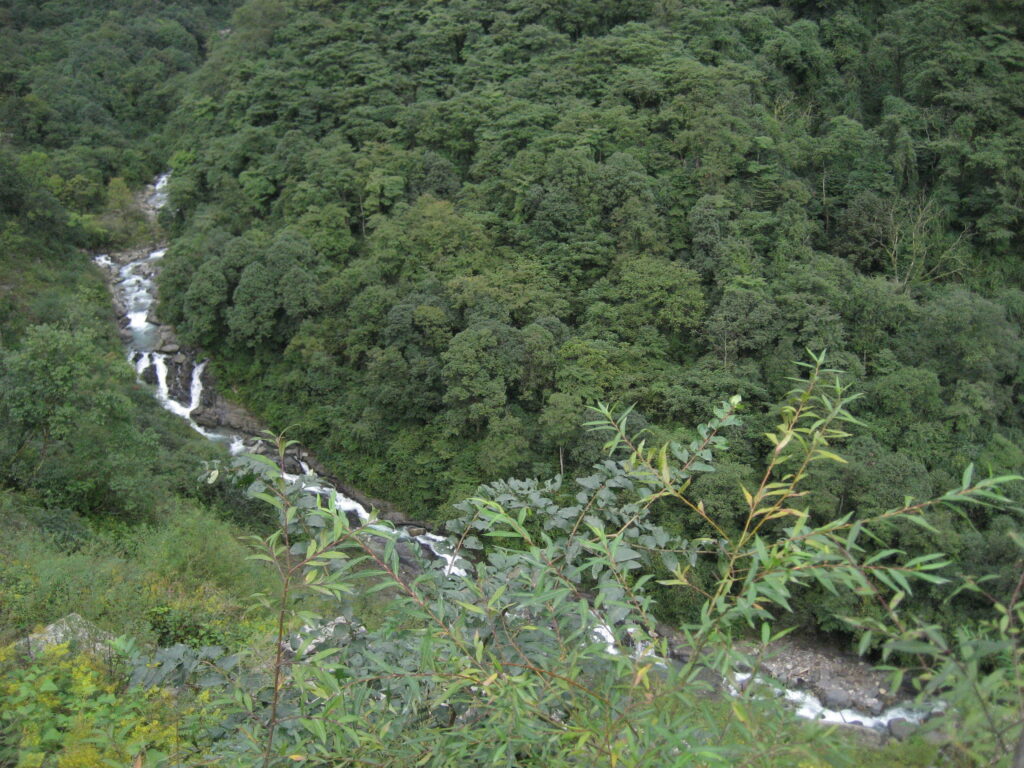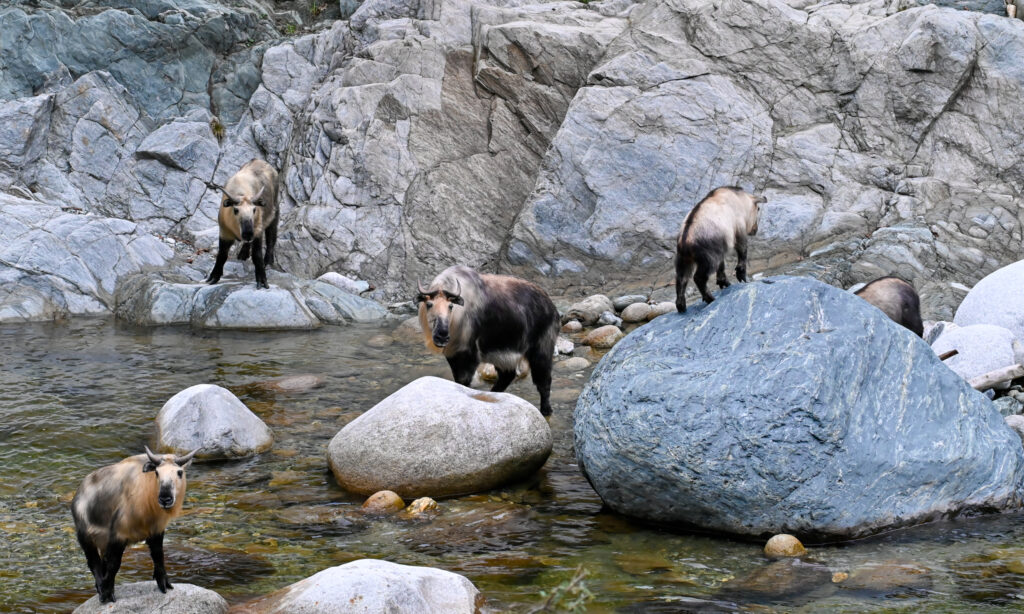
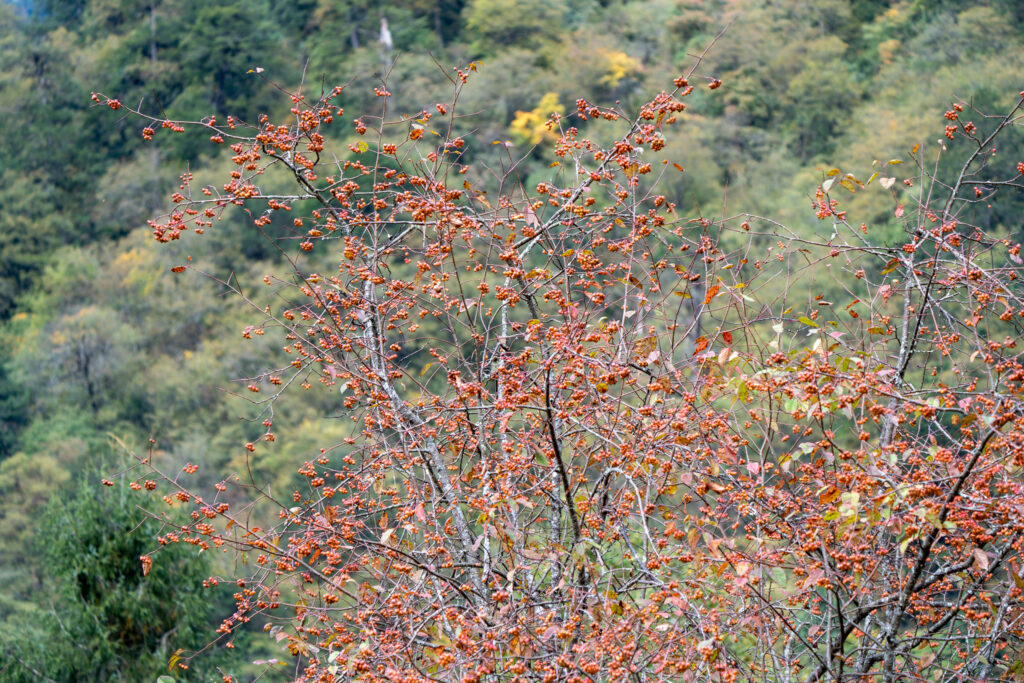
Fruiting rowan trees gave us a place to start looking for wild red pandas in Labahe. But it was a second look at a familiar stretch of forest that led to our most memorable encounter.
Between October 8 and 12, I took Djordje to Labahe Nature Reserve near Ya’an, Sichuan, to search for wild red pandas.
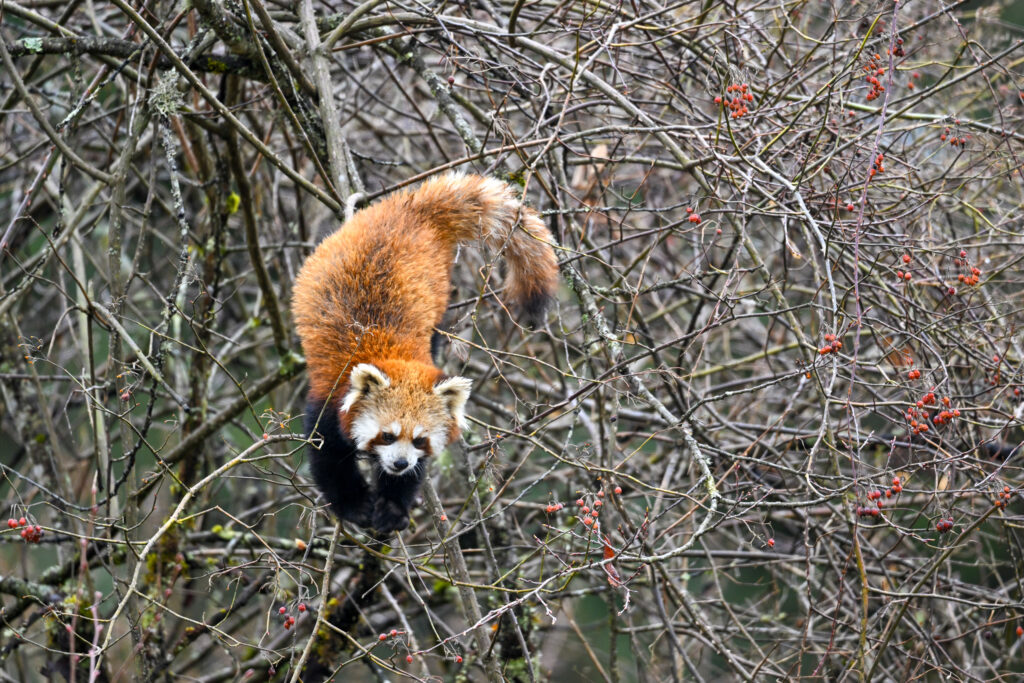
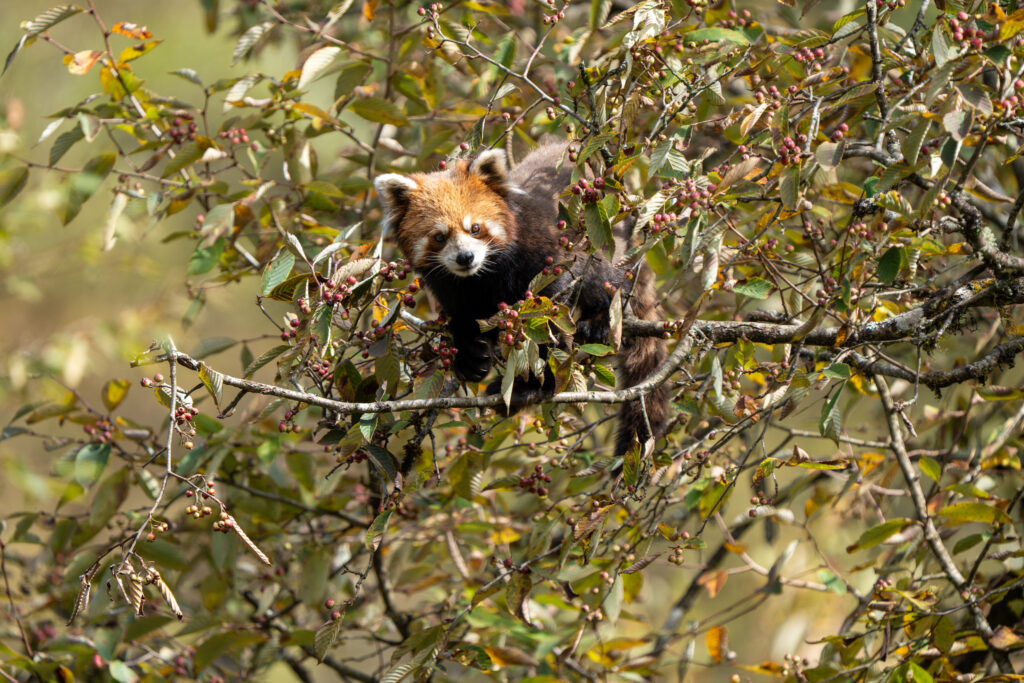
Autumn is an interesting time for this kind of trip because rowan trees are carrying fruit, and red pandas feed on the berries. Instead of giving every stretch of forest the same attention, we could start with trees that seemed worth checking.
That did not make a sighting certain. An animal might be high among the branches, partly hidden by leaves, or simply not there when we passed. We had several places in mind, but the forest would decide what we actually saw.
Looking Up After Dark
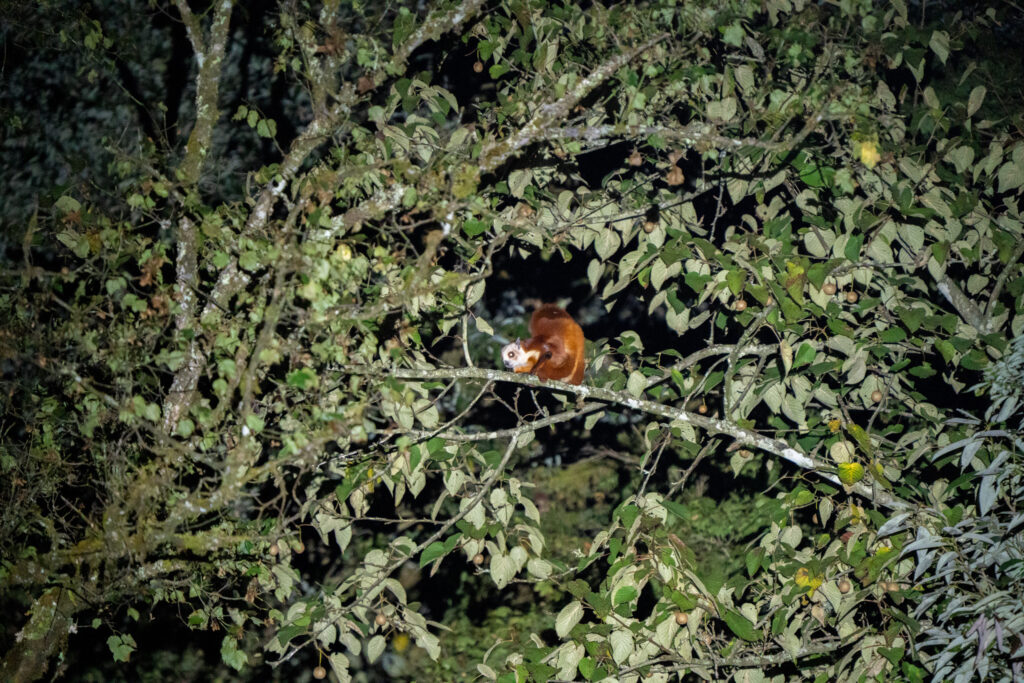
After arriving at Labahe, we went out after dark to look for a red-and-white giant flying squirrel.
When I search for this species, I pay particular attention to upper branches and rocky ledges. It is easy to watch the path ahead, but the animal you are looking for may be well above it.
We kept checking those higher places and found one that evening. It was an encouraging start, although our main search would begin the next morning.
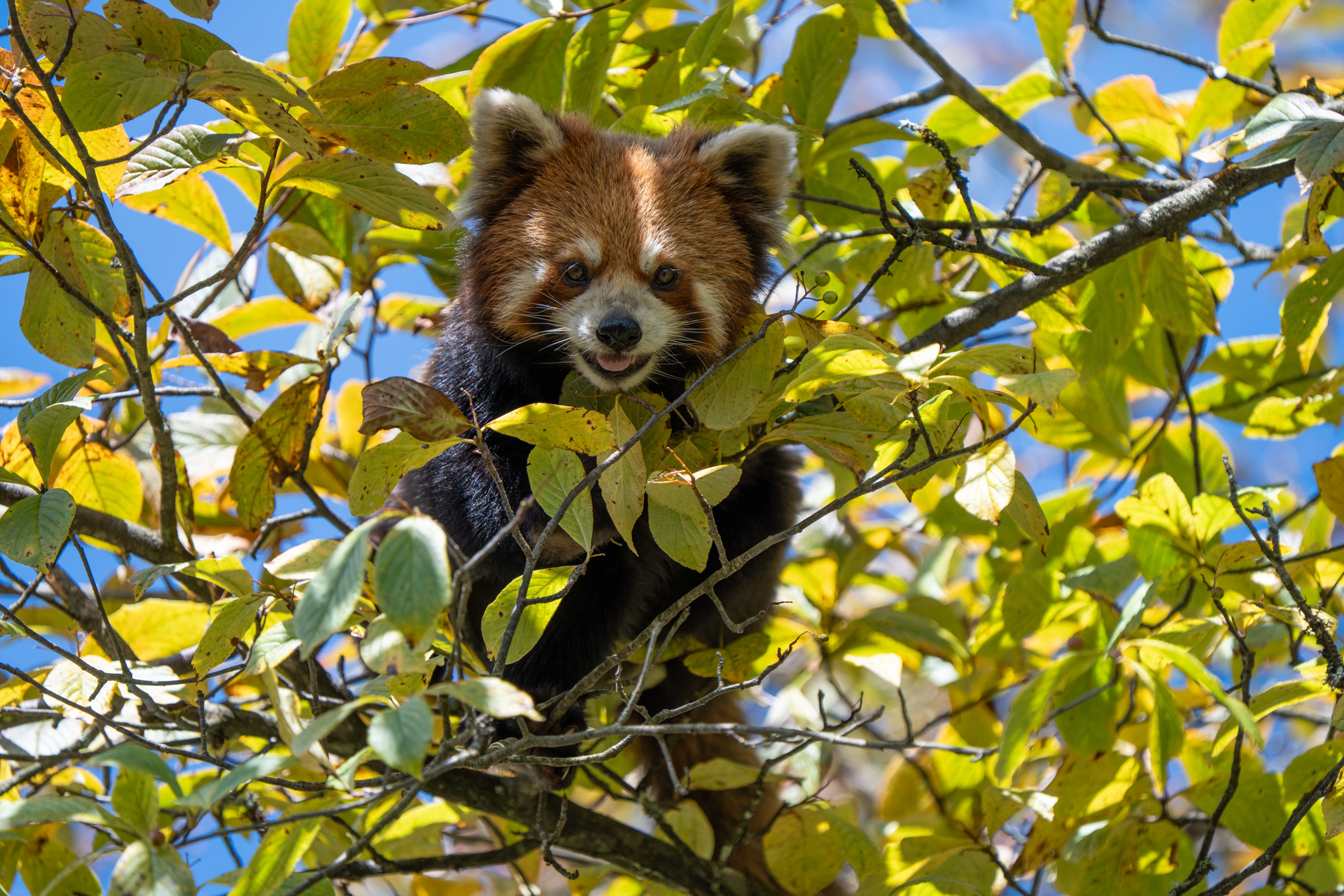
Early the following day, we spotted our first red panda. It was asleep high in a large tree.
We were pleased to find one, but its position made a clear view and photography difficult. After watching for a while, we carried on. There was still time to look for an animal in a more visible position.
The Leaves Were Moving
From around eight o’clock, we searched along the route, stopping repeatedly to examine trees I knew were worth checking.
For a long stretch, we found no other pandas.
Eventually, I suggested to Djordje that we turn around and walk the same way again.
Going back can feel like repeating yourself, but the view is never quite the same. An animal may move, start feeding or become visible through a gap that was hidden from the other direction.
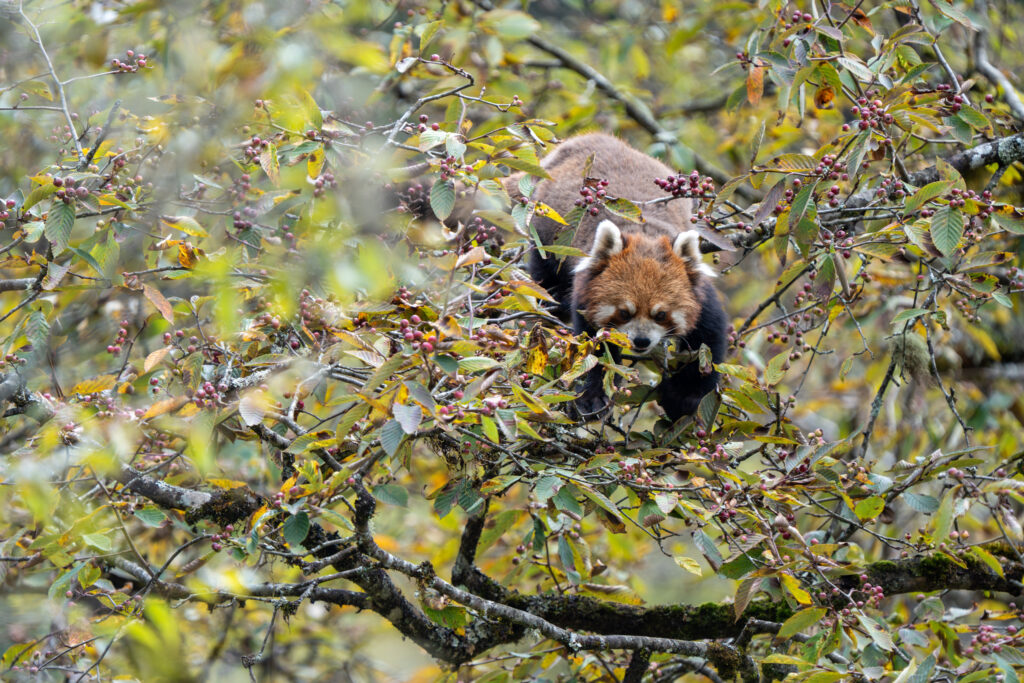
On our way back, I noticed leaves moving rhythmically in a tree on the right.
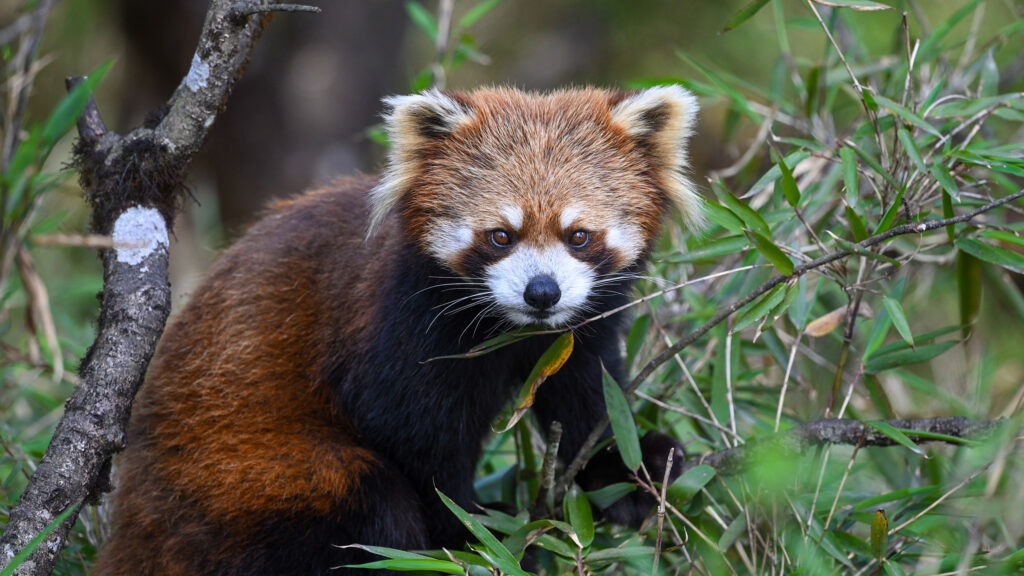
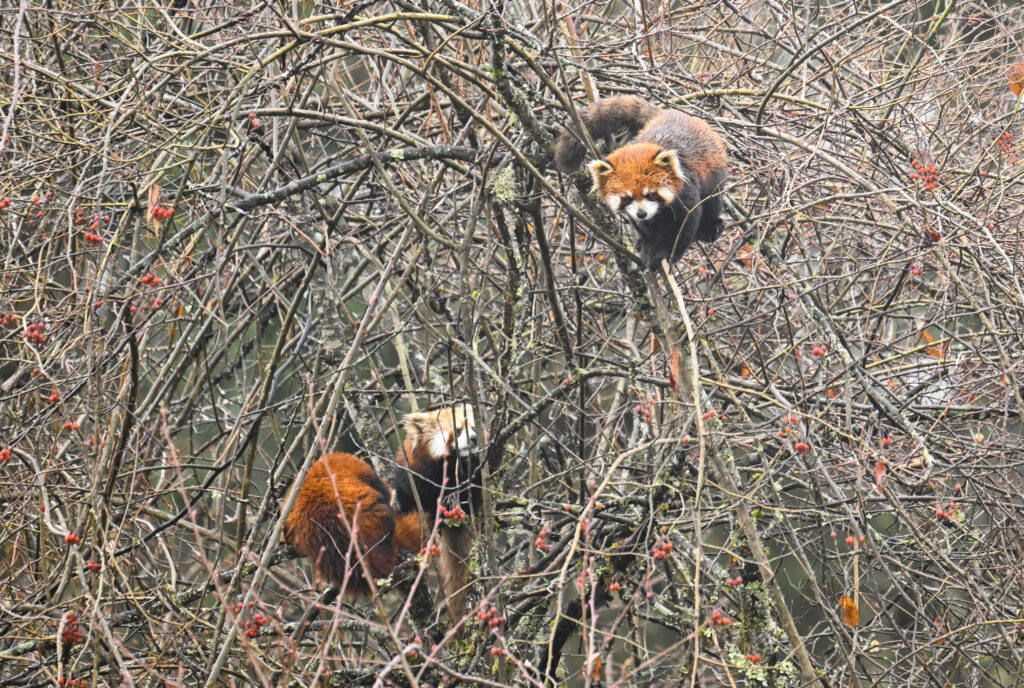
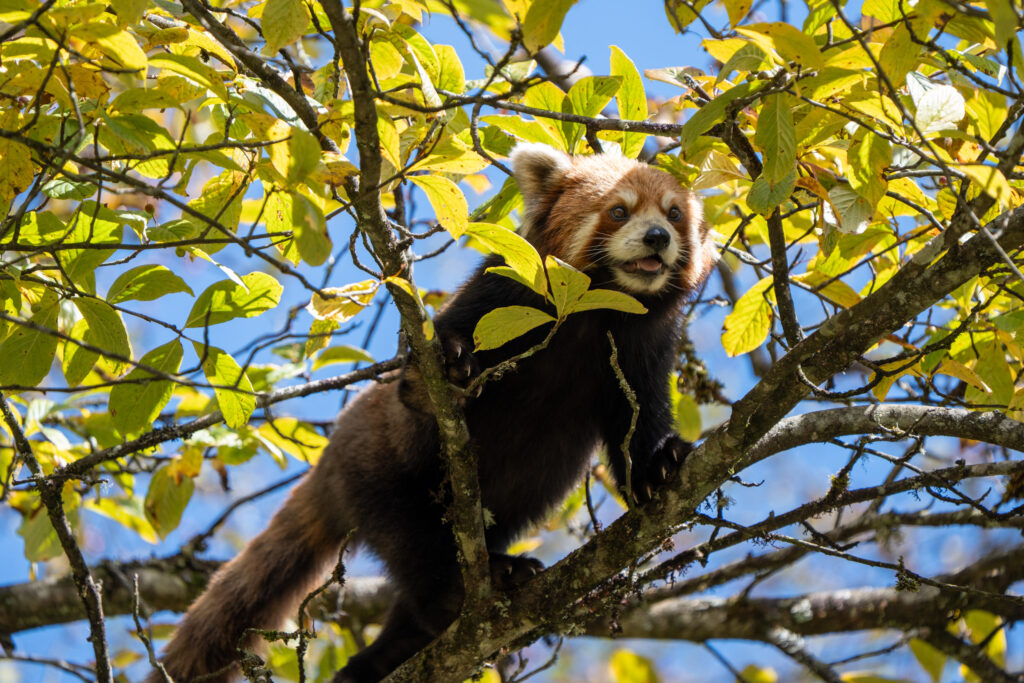
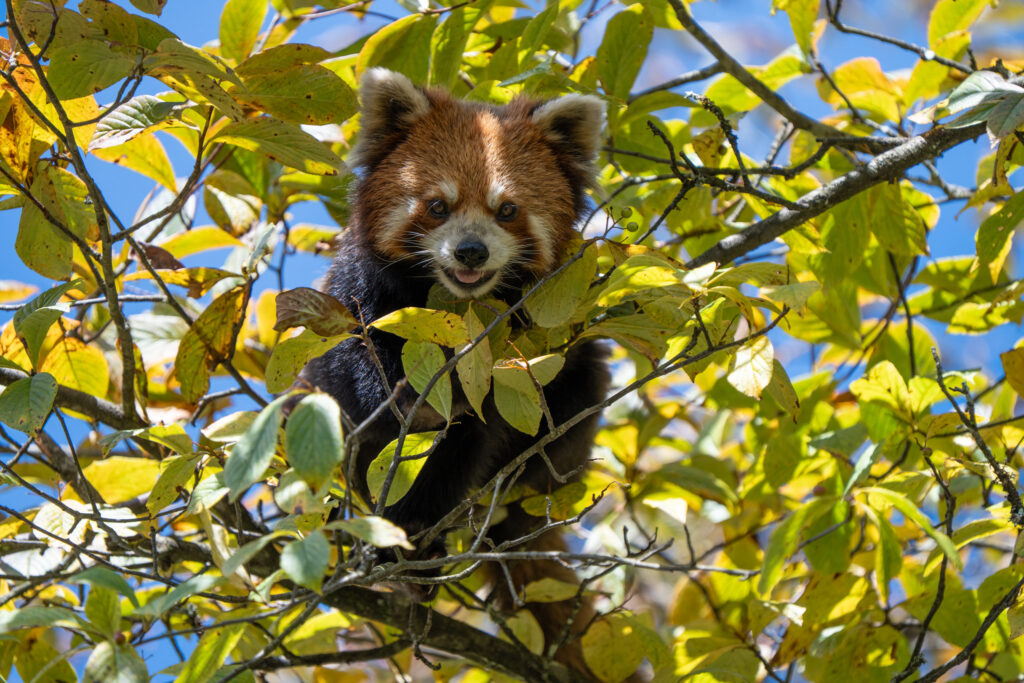
We stopped and looked through the foliage. A red panda was feeding in the branches.
Then we looked more closely at the other side of the tree.
There was a second red panda, also feeding.
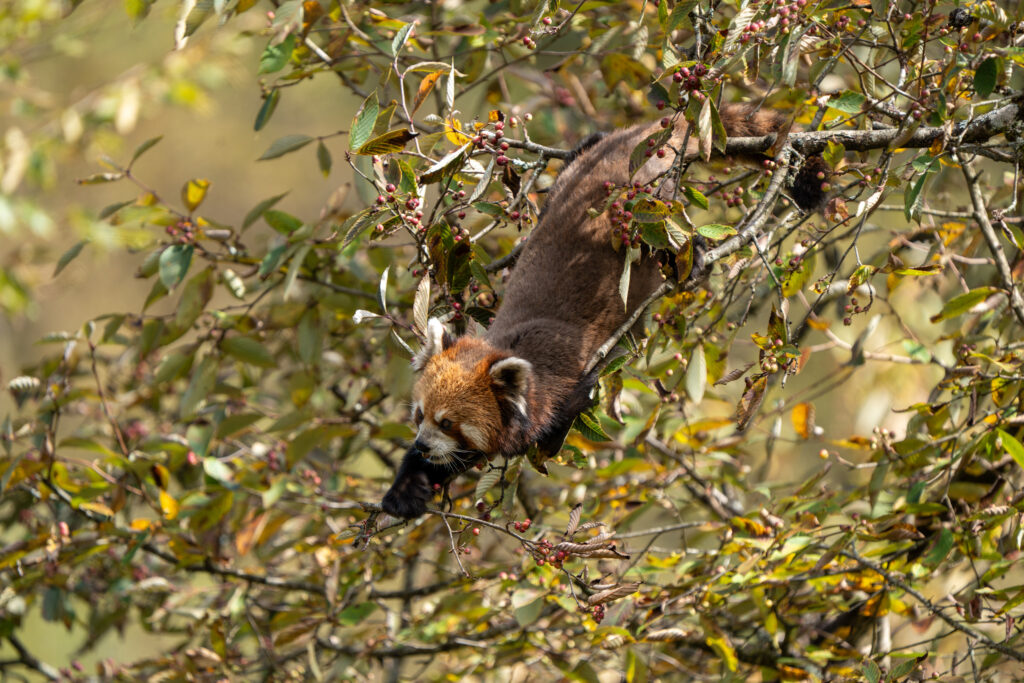
Two wild red pandas in the same tree.
A small movement in the leaves had given us the encounter we had been hoping for.
We spent much of the remaining day watching and photographing them. We could wait for openings between the leaves and follow their movements as they fed.
We could easily have missed them. We had already walked that stretch once. If I had not noticed the leaves, we might have passed the tree again without knowing what was above us.
A Pheasant We Couldn’t Photograph
On the third morning, one of the pandas we had watched was feeding again. We took a few photographs, but the early light was not good, and we still had another species to look for.
Lady Amherst’s pheasant was also on our list. I took Djordje to several observation points, and we checked the bamboo and surrounding woodland carefully.
Something moved in a small patch of bamboo on our left.
I looked again and saw a large Lady Amherst’s pheasant.
I called Djordje over immediately, but before we could ready our cameras, the bird flew into the woodland on the right.
We had seen it, but we had missed the photograph.
Djordje said it had still been a very interesting experience. That felt like a fair description of wildlife watching: not every sighting becomes an image.
What I remember most from Labahe is that pause beside the tree, when we realised there were two red pandas feeding above us.
The rowan fruit gave us a reason to search; patience and a second look made the difference.
If you would enjoy a morning spent moving slowly through the forest, looking up and seeing what appears, come explore Labahe with us.
No sighting is promised, but the search itself is part of the experience.