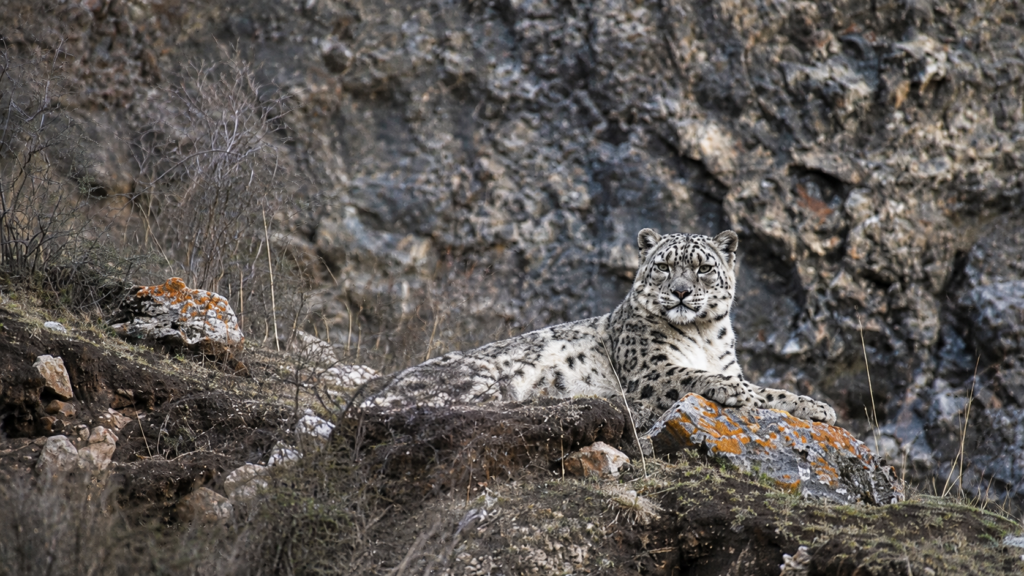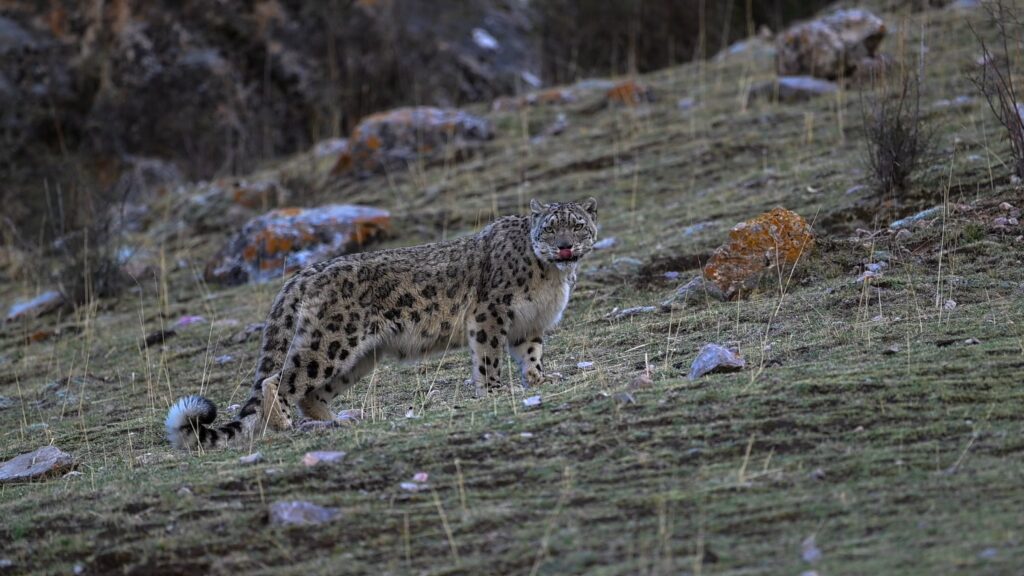
This story is based on an account shared by Silvano, a guest from Italy, of his first snow leopard sighting in Qinghai.
In March 2026, Qinghai was still deep in winter. The mountains were covered in snow, the roadsides were frozen, and the high valleys were surrounded by a pale, cold landscape.
It was also one of the most rewarding periods for searching for snow leopards, Pallas’s cats and Eurasian lynx.
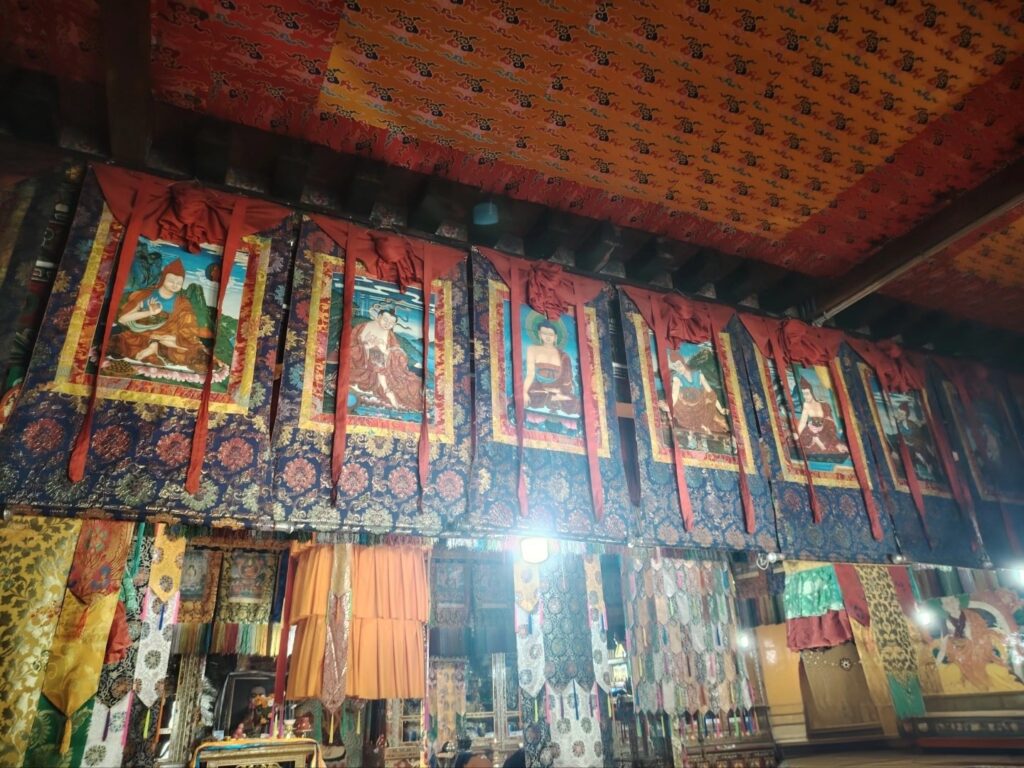
We travelled from Xining to Xiangride, where we visited the well-known Xiangride Temple before resting for the night. The next morning, we would leave at six o’clock. At that hour, it would still be completely dark.
From Xiangride to the High Valleys
Our accommodation was around 2,500 to 3,000 metres above sea level, but the search areas were much higher. We had to drive towards valleys and slopes around 4,000 to 4,500 metres, where the terrain and wildlife habitat were more suitable for snow leopard searches.
When we reached the local conservation station, one of the staff members told us that there had been recent activity from a Eurasian lynx.
We waited quietly.
Then a voice suddenly came through the radio.
“There it is. Left side, in the grass.”
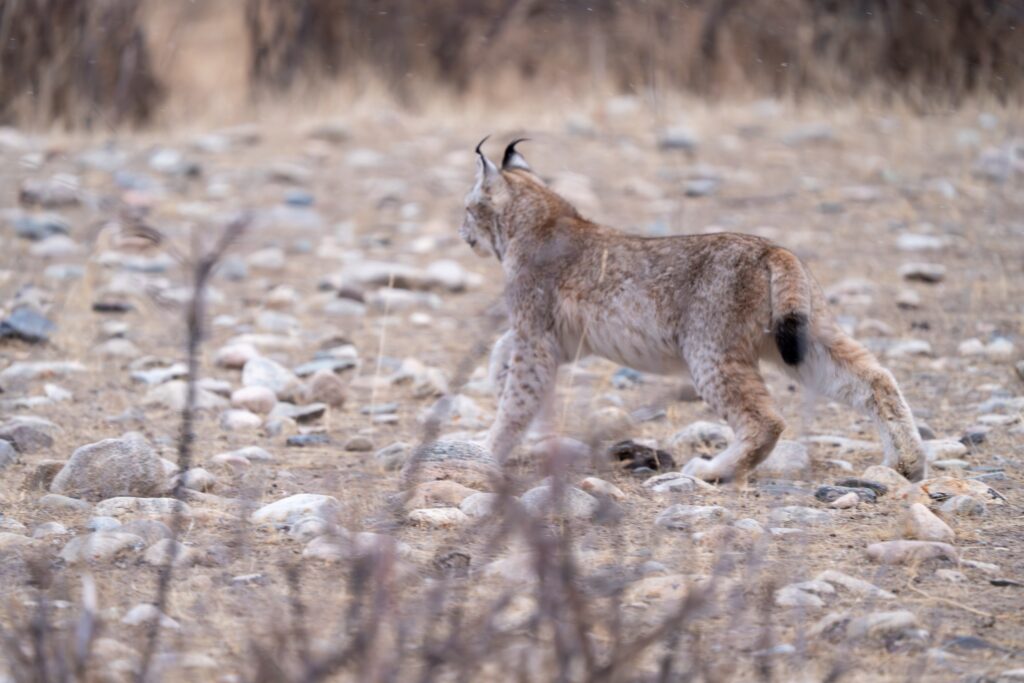
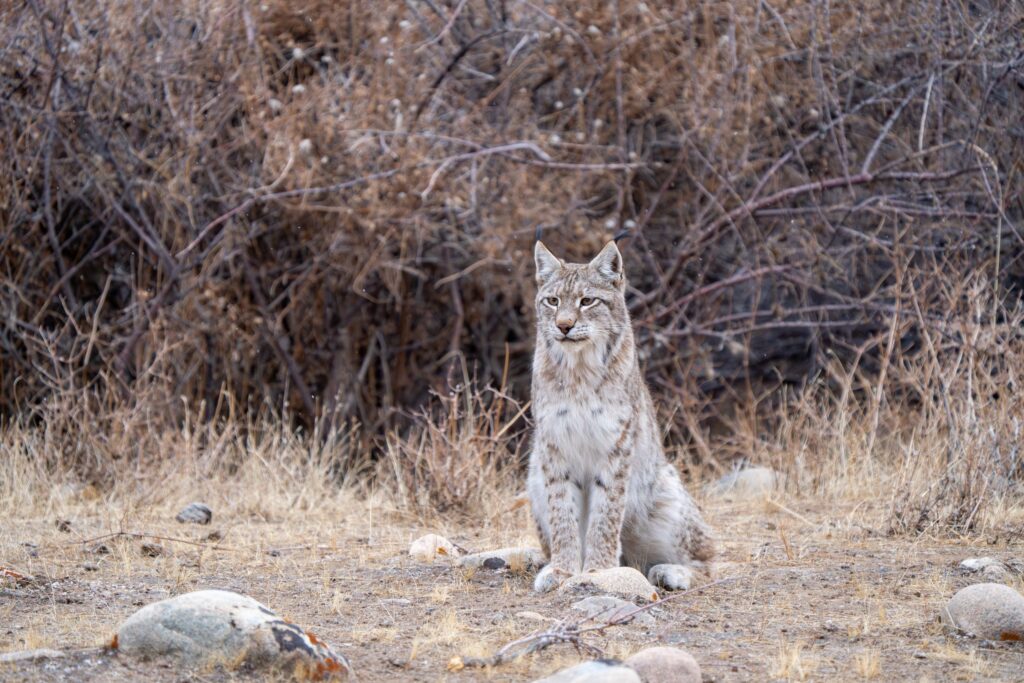
Everyone became alert. We watched the left side of the valley and suddenly saw a plateau hare running wildly through the grass. Close behind it was a Eurasian lynx.
The chase was fast, but the hare reacted first and escaped. The lynx did not catch it.

For a moment, it seemed the encounter was already over. Then the lynx slowly walked towards an open area beside our vehicle.
The change in position gave us an excellent angle. The light, the distance and the animal’s movement came together for a few precious moments. We were able to watch and photograph the lynx much more clearly than we had expected.
A Quiet Midday in the Mountains
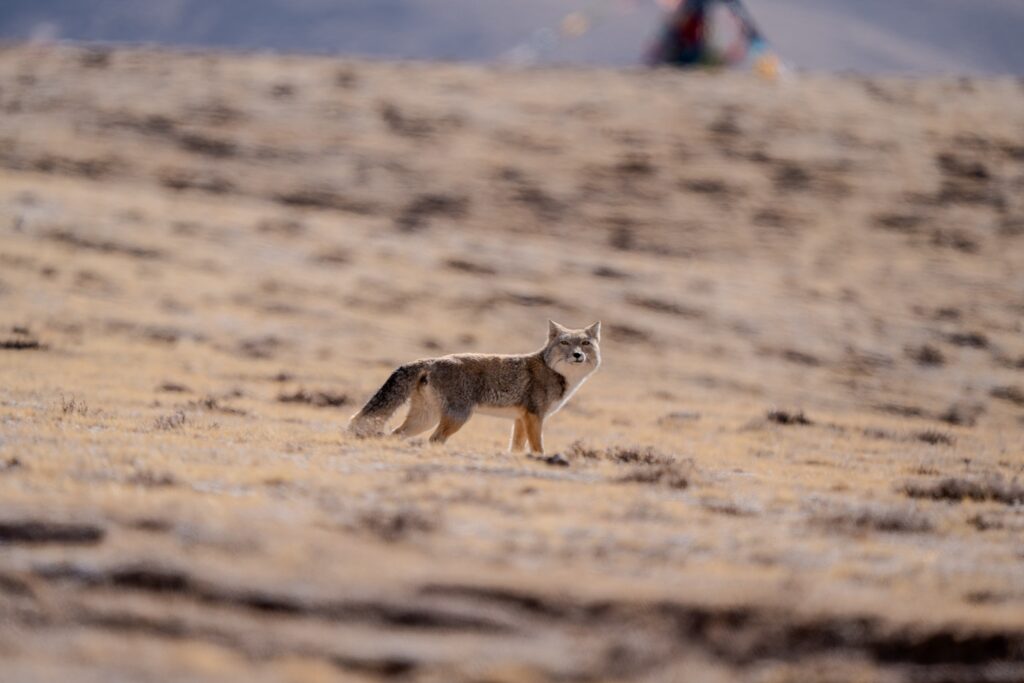
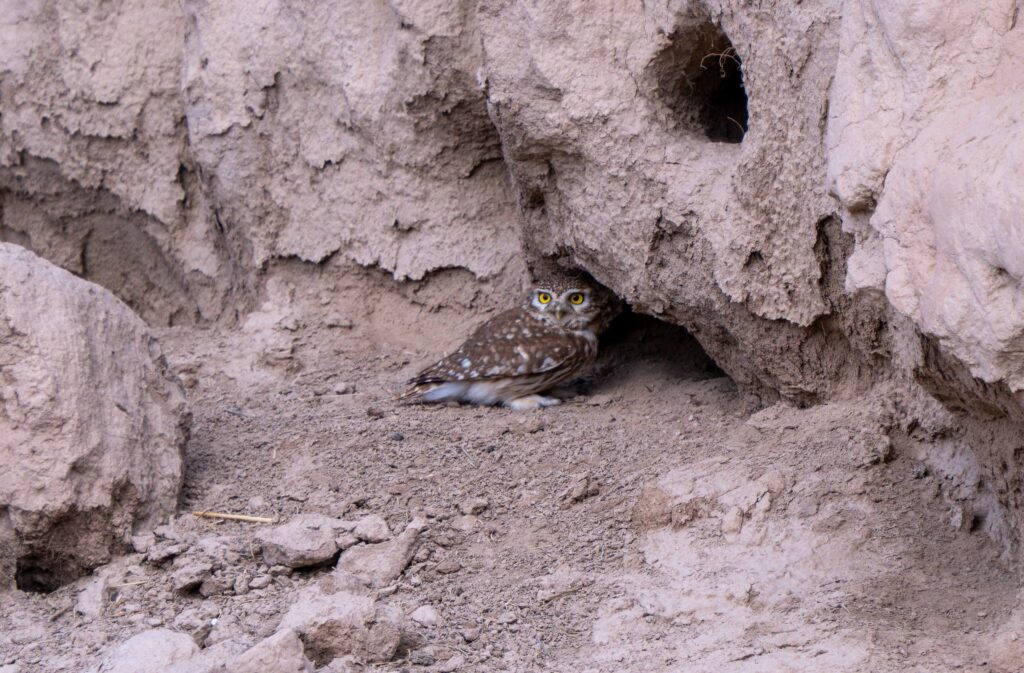
We continued searching through the morning and also spotted a Tibetan fox daydreaming in the open landscape.Later, we spotted a small owl, which added another unexpected moment to the day.
Around midday, we returned to the conservation station to rest. Several photographers from different parts of China had gathered there over the years, and the station displayed many of their memorable wildlife photographs.
The animals were generally quieter in the middle of the day, so it was a good time for us to warm up, eat and review what we had seen.
A Pallas’s Cat by the Bridge
At around three o’clock, we set out again.
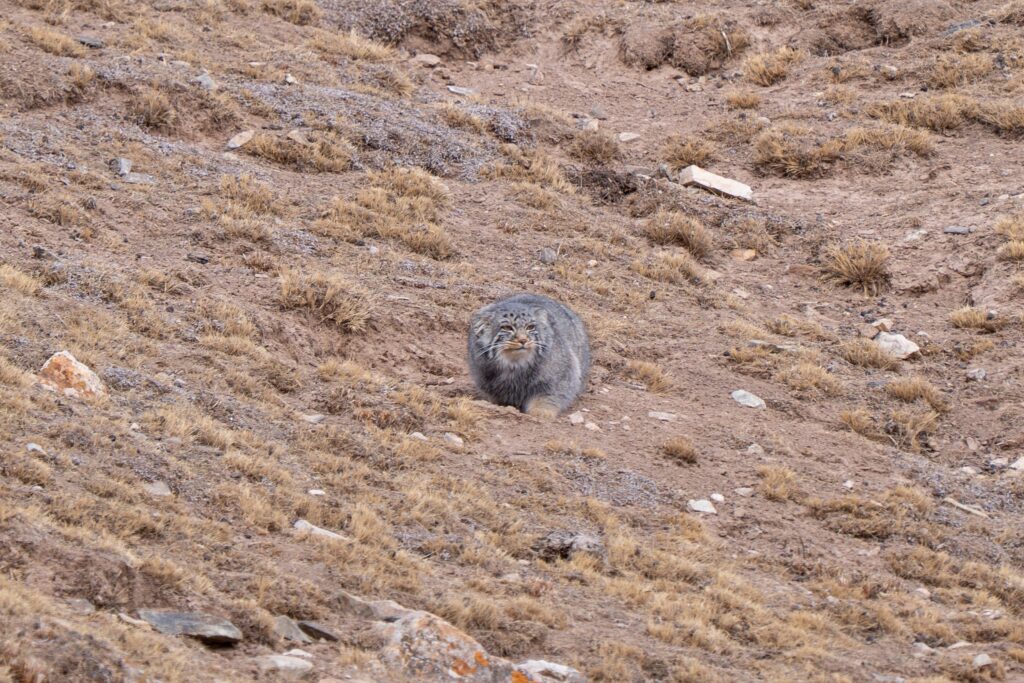
After crossing a small bridge, we noticed a dark shape moving on the hillside to our right. We stopped immediately and began to observe it through the scope.
It was a Pallas’s cat hunting.
This time, the animal was less than 50 metres away. It moved low to the ground, creeping forward with its body close to the snow and grass. Its serious expression and surprisingly awkward movements made it look both determined and strangely funny.
We stayed with it for as long as we could, watching until it slowly disappeared from view.
By then, we had already seen two different wild cats in one day. We still had one main target left.
The Moment on the Ridgeline
Snow leopards are often more active around dawn and dusk, so the period between six and seven in the evening was still important.
We searched several areas where a snow leopard might appear, but as the light began to fade, we still had not seen one.
We started driving back towards the hotel.
Then the radio came alive again.
The conservation staff had seen what might be a snow leopard on the ridgeline to our left.
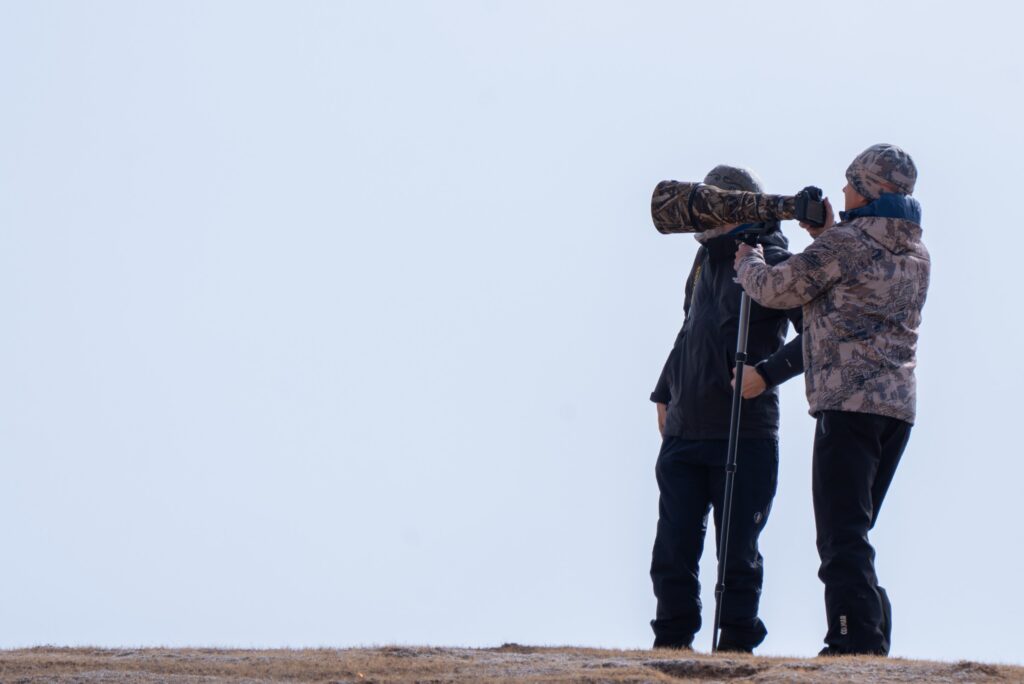
We stopped, set up the spotting scope and began scanning the mountain.
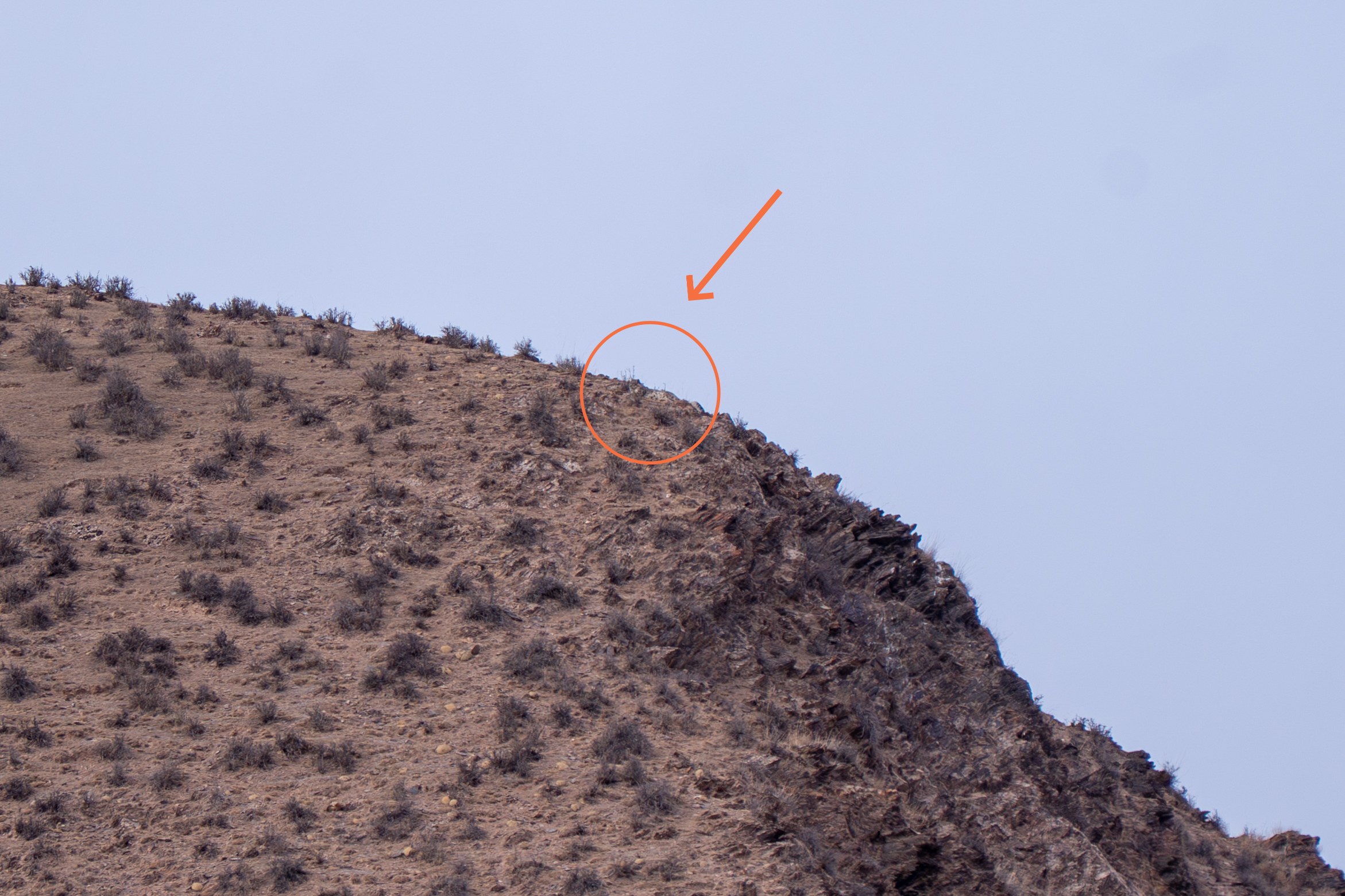
And there it was.
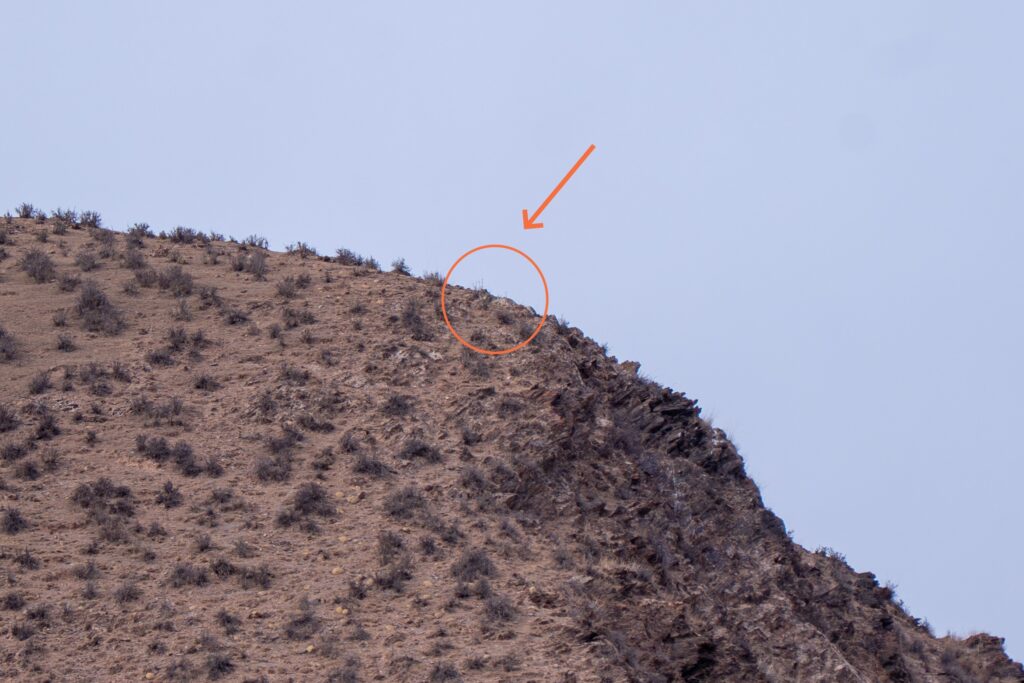
High on the ridge, we could see the long tail and the relaxed shape of the animal moving across the snow. The distance and fading light made photography difficult, but the experience of seeing a wild snow leopard with our own eyes was completely different from looking at a photograph.
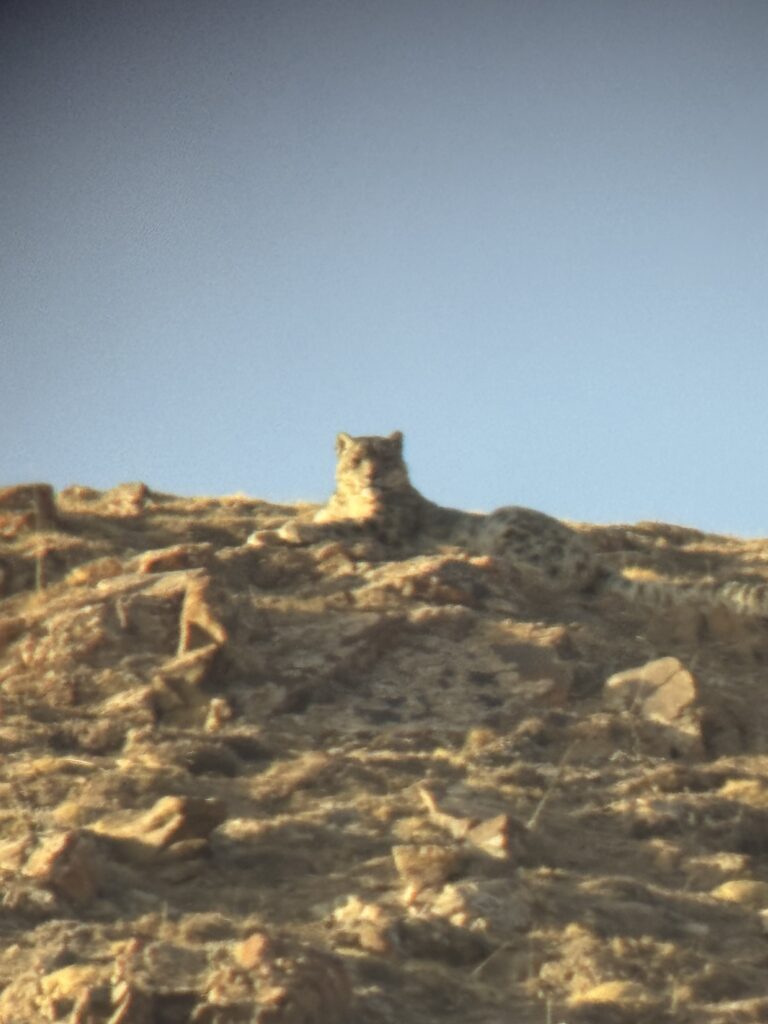
That day, we had seen three wild cats: a Eurasian lynx, a Pallas’s cat and a snow leopard.
On the drive back, everyone was still excited. We were already thinking about the next morning and wondering what else the Qinghai mountains might reveal.