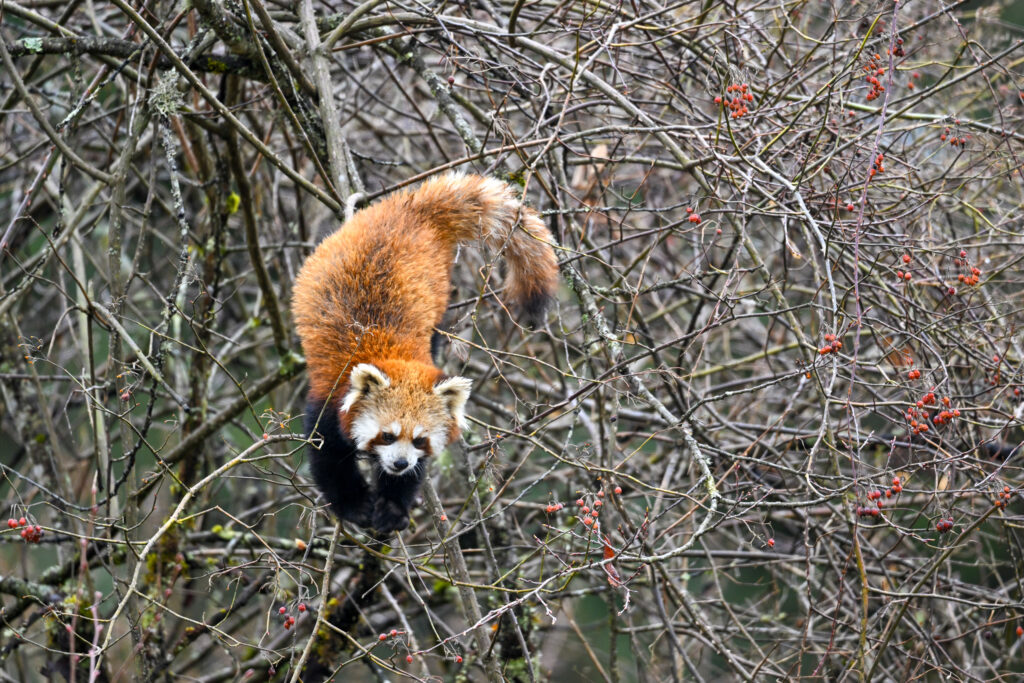
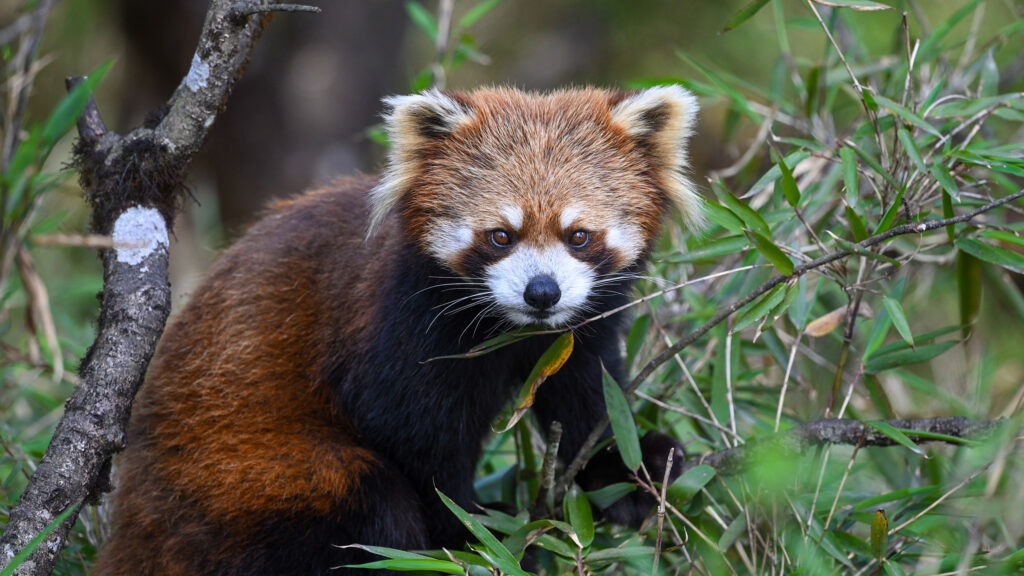
Wild red panda searches in Labahe
Spend three and a half field days searching Labahe's bamboo-rich mixed forests and mountain valleys for wild red pandas.

This six-day Sichuan wildlife photography tour is built around wild red panda searches in Labahe. The first four days give the group repeated time in Labahe’s forest valleys, including a guided night wildlife session, two full days of red panda searching and a final morning observation period before the route continues into the mountains.
The second stage adds selected companion wildlife and flagship bird species. The Chinese Monal is searched for and photographed in the wild in a designated high-elevation observation area. The Lady Amherst’s Pheasant session near Kangding takes place from a managed bird hide. The final morning focuses on wild Mandarin Ducks along river and stream habitat near Tianquan.
Red pandas, nocturnal wildlife, Chinese Monal and Mandarin Ducks are observed in natural habitats. The Lady Amherst’s Pheasant bird-hide session is the only managed photography experience on the route. Sightings depend on weather, animal movement, visibility, local access and conservation guidance.
Chengdu, Labahe
6 Days
Flexible seasonal planning for red panda and mountain bird activity
Private journey or small-group departure
Moderate
Local accommodation in Labahe, the Chinese Monal observation area and Tianquan
Spend three and a half field days searching Labahe's bamboo-rich mixed forests and mountain valleys for wild red pandas.
Begin the journey with a guided night session for wild nocturnal and crepuscular mammals, owls and other forest wildlife.
Photograph the Chinese Monal in a natural high-elevation mountain habitat without a bird hide or feeding station.
Combine wild Mandarin Duck and Chinese Monal observation with one managed bird-hide session for Lady Amherst's Pheasant.
Leave Chengdu early and travel towards Labahe through the Ya’an and Tianquan corridor. Arrive around midday, check in and have lunch. The afternoon is used to prepare photography equipment, review the evening route and rest before the first field session.
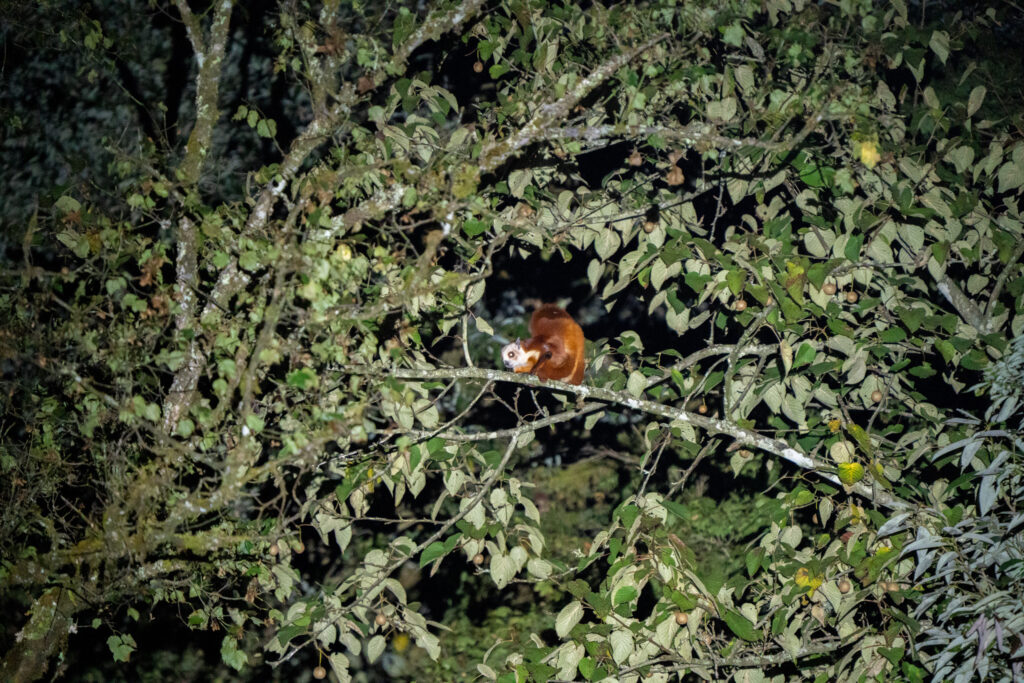
After sunset, begin a guided night wildlife exploration on approved roads or trails. The session focuses on wild nocturnal and crepuscular animals. Depending on conditions, possible observations may include deer, forest musk deer, civets, macaques, owls and other night-active forest species. The route and use of lights follow local regulations and the guide’s instructions.
Start early and enter the forest for a full day of wild red panda searching and photography. The morning focuses on cool, humid mixed forest, bamboo margins, dense understory, tree cover and sheltered mountain slopes. The guide will help identify suitable red panda habitat and search for animals moving through the canopy, resting in trees or feeding near bamboo and fruiting vegetation.
Return for a midday break and continue the search in the afternoon. The guide may select a different forest section or revisit a location with fresh signs from the morning session. The pace remains slow and quiet, with time for canopy scanning, habitat interpretation and patient photography.

Continue the full-day red panda search in Labahe with a revised route and observation strategy. Before entering the forest, the guide will review the previous day’s signs, possible sightings, weather and visibility. The group may explore another elevation band, return to productive habitat or follow a different forest trail.
The morning and afternoon sessions follow the same wildlife photography rhythm. The focus remains on locating wild red pandas, observing their behaviour and photographing them without influencing their movement. Other forest mammals and birds may be observed during the search.
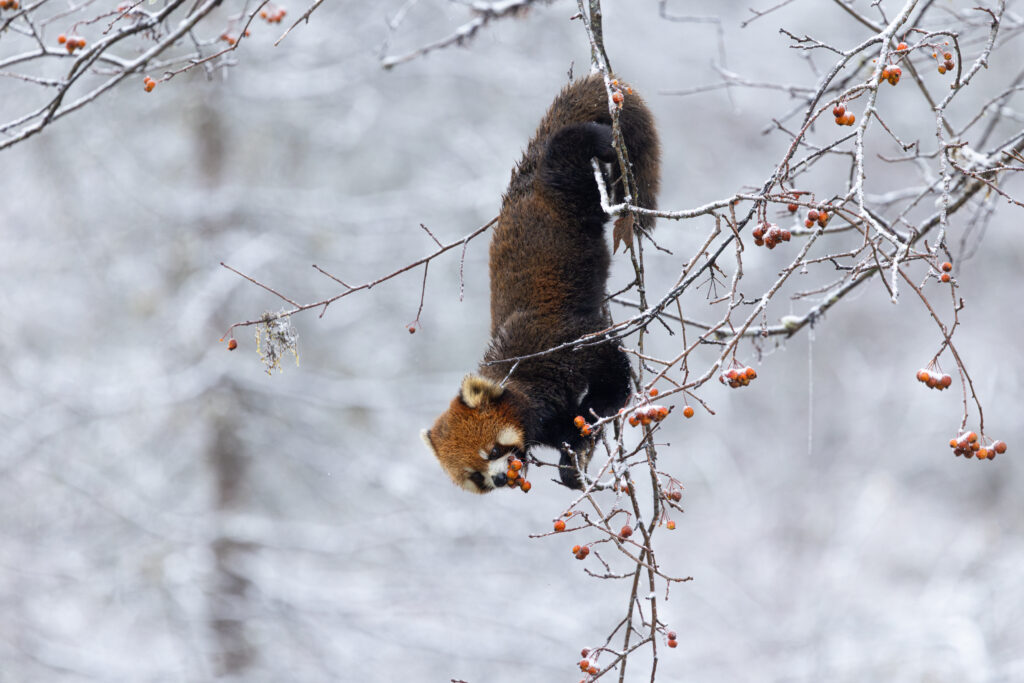
Use the morning for a final wild red panda and companion wildlife search in Labahe. The route will be selected according to the previous two days of observations, recent animal signs, weather and local access. The group may focus on red panda habitat, forest birds or another promising wildlife area.
After the morning session, begin the afternoon transfer to the Chinese Monal observation area. The landscape gradually changes from Labahe’s humid forest valleys to higher mountain terrain, with conifer forest, upland valleys, alpine shrubland and more open slopes. Arrive in the observation area in the evening and check in.

Begin early in the Chinese Monal observation area for a wild mountain bird photography session. The search takes place in natural high-elevation habitat, including conifer forest, alpine shrubland, forest edges and open mountain slopes. No bird hide, feeding station or managed viewing setup is used for the Chinese Monal session.
After lunch, continue towards Kangding for an afternoon photography session from a designated bird hide for Lady Amherst’s Pheasant. The hide provides a stable and controlled position while following local site management rules. This is the only managed bird-hide session in the journey. After the session, continue towards Tianquan for the overnight stay.

Leave Tianquan before sunrise and travel to a suitable river, stream or wooded wetland area for wild Mandarin Duck photography. The morning session focuses on slow-moving water, shaded pools, wooded riverbanks and forest streams. The guide will select the observation area according to seasonal presence, recent sightings, water conditions and local access.
The Mandarin Ducks are observed in their natural habitat. Other riverine and woodland birds may also be present. After the morning photography session, have breakfast or a simple local meal before returning to Chengdu through the Ya’an corridor.

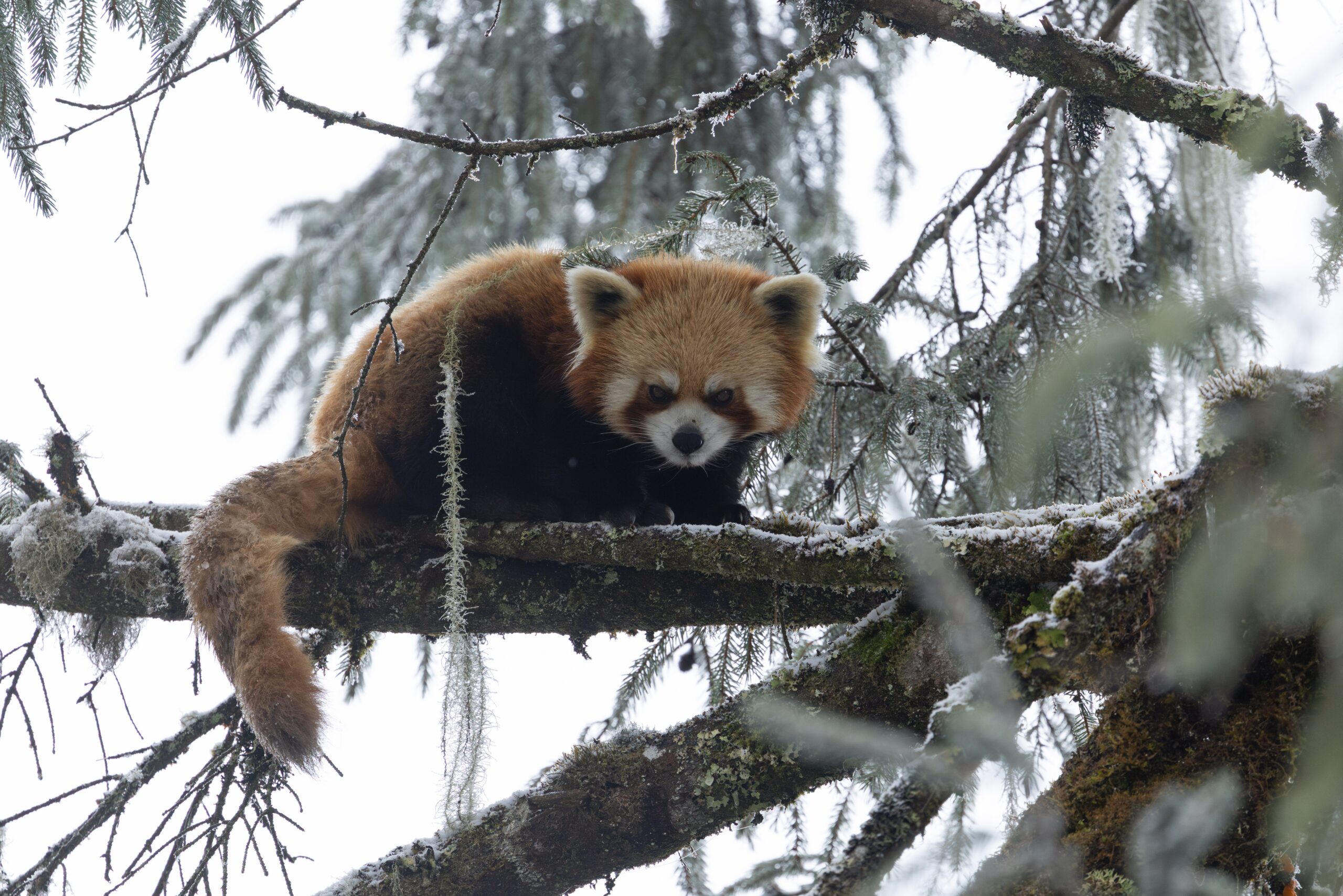
Wild red pandas are the primary target of this journey, but sightings are never guaranteed. Search time, weather, visibility, recent movement and local access all affect the outcome.
Red pandas, nocturnal wildlife, Chinese Monal and Mandarin Ducks are observed in natural habitats. The Lady Amherst’s Pheasant session near Kangding is the only managed bird-hide experience on the route.
Days 2 and 3 include extended forest searching and periods of standing or waiting. Day 5 combines an early bird session with long mountain transfers. The overall physical level is moderate.
Bring a telephoto lens, spare batteries, rain protection and a stable support system where suitable. Guests must follow the guide, keep distance from animals and avoid calling, feeding or changing wildlife behaviour.
Wild red panda searching and photography in Labahe is the central focus. Chinese Monal, Lady Amherst’s Pheasant, Mandarin Ducks and other animals are additional wildlife and bird targets.
Yes. The red pandas are searched for in their natural mountain forest habitat. Sightings depend on weather, visibility, animal movement and the time available for field observation.
The journey includes a night wildlife session on Day 1, full-day searches on Days 2 and 3, and a final morning search on Day 4 before the route continues to the Chinese Monal observation area.
Almost all observations are wild. Red pandas, nocturnal wildlife, Chinese Monal and Mandarin Ducks are searched for in natural habitats. The only managed photography experience is the Lady Amherst’s Pheasant session from a designated bird hide near Kangding.
No. The Chinese Monal is searched for and photographed in its natural high-elevation habitat. No bird hide or feeding station is used for this session.
The species is wild, but this itinerary uses a managed bird hide near Kangding for the photography session. This is the only bird-hide experience on the route.
Possible companion targets include forest deer, takin, Chinese serow, forest musk deer, macaques, civets, owls, raptors and other mountain birds. These are secondary targets and are not guaranteed.
3 Days
📍 Chengdu, Labahe
A three-day journey from Chengdu to Labahe for daytime red panda searches, broader wildlife observation, two evening wildlife searches and an optional Tianquan Wetland Park stop.
2 Days
📍 Chengdu, Wawu Mountain
A compact two-day escape from Chengdu to Wawu Mountain, combining a relaxed foothills stay with guided wild red panda tracking along forest trails before returning to the city.
A little detail is enough for us to begin shaping your journey.
No mailing lists. No pressure. Just a conversation about your journey.