
Sandstone pillars, forested ravines and mountain viewpoints define one of Hunan’s most distinctive natural landscapes.
April or October
Quartz sandstone pillar landscapes
Mountain viewpoints, trails and ravines
3–4 days
Zhangjiajie brings together one of China’s most recognizable mountain landscapes and a protected World Heritage setting. Wulingyuan contains more than 3,000 narrow quartz sandstone pillars and peaks, many rising above 200 metres, alongside ravines, streams, caves and natural bridges. The unusual concentration of vertical rock forms gives the area its visual identity and underpins its international conservation significance.
For travelers, the destination is not a single viewpoint but a broad mountain environment. Forest paths, cliff-edge lookouts and valley routes reveal the pillars from changing heights, while mist and low cloud can transform the scale and mood of the scenery.
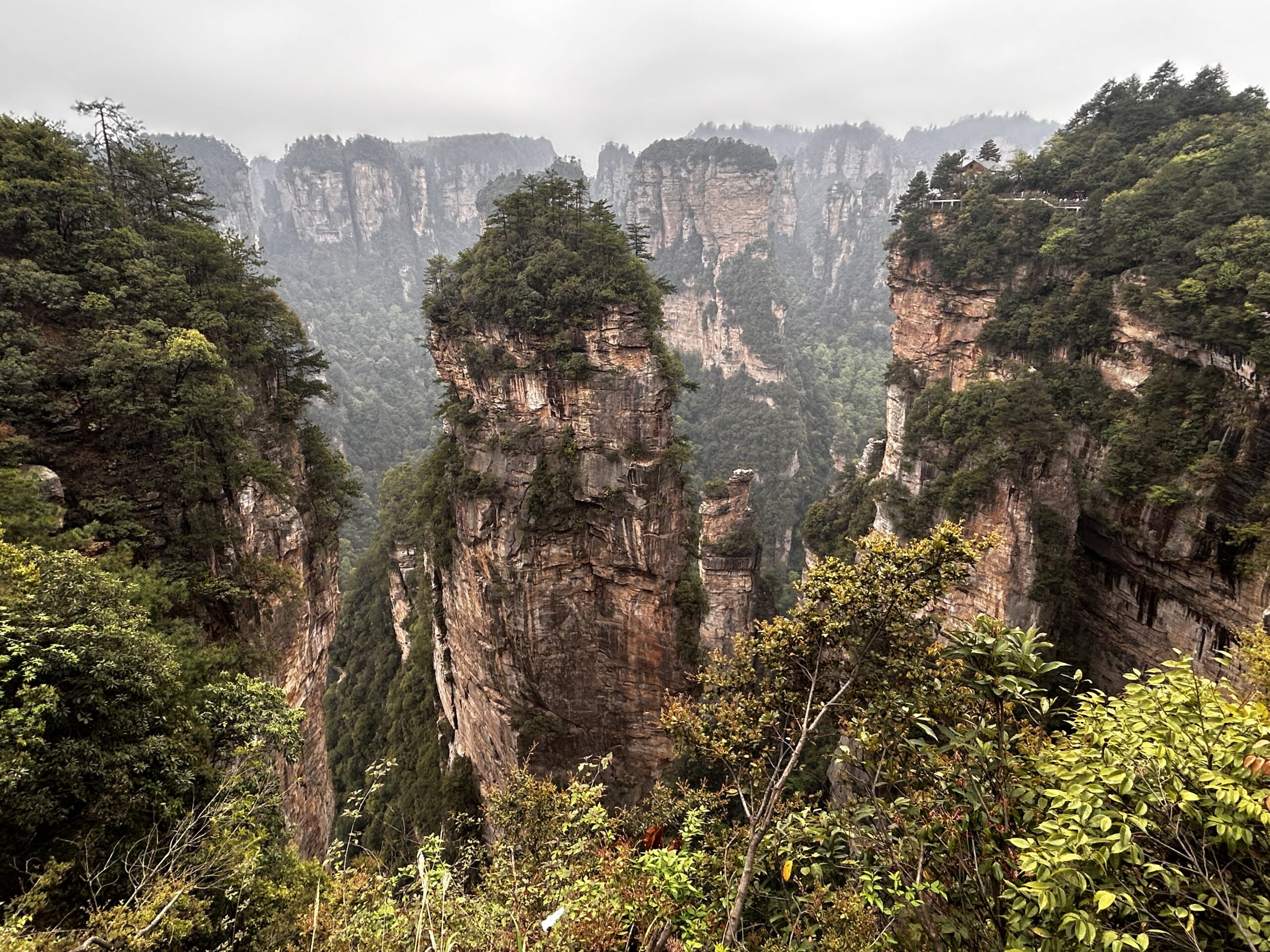
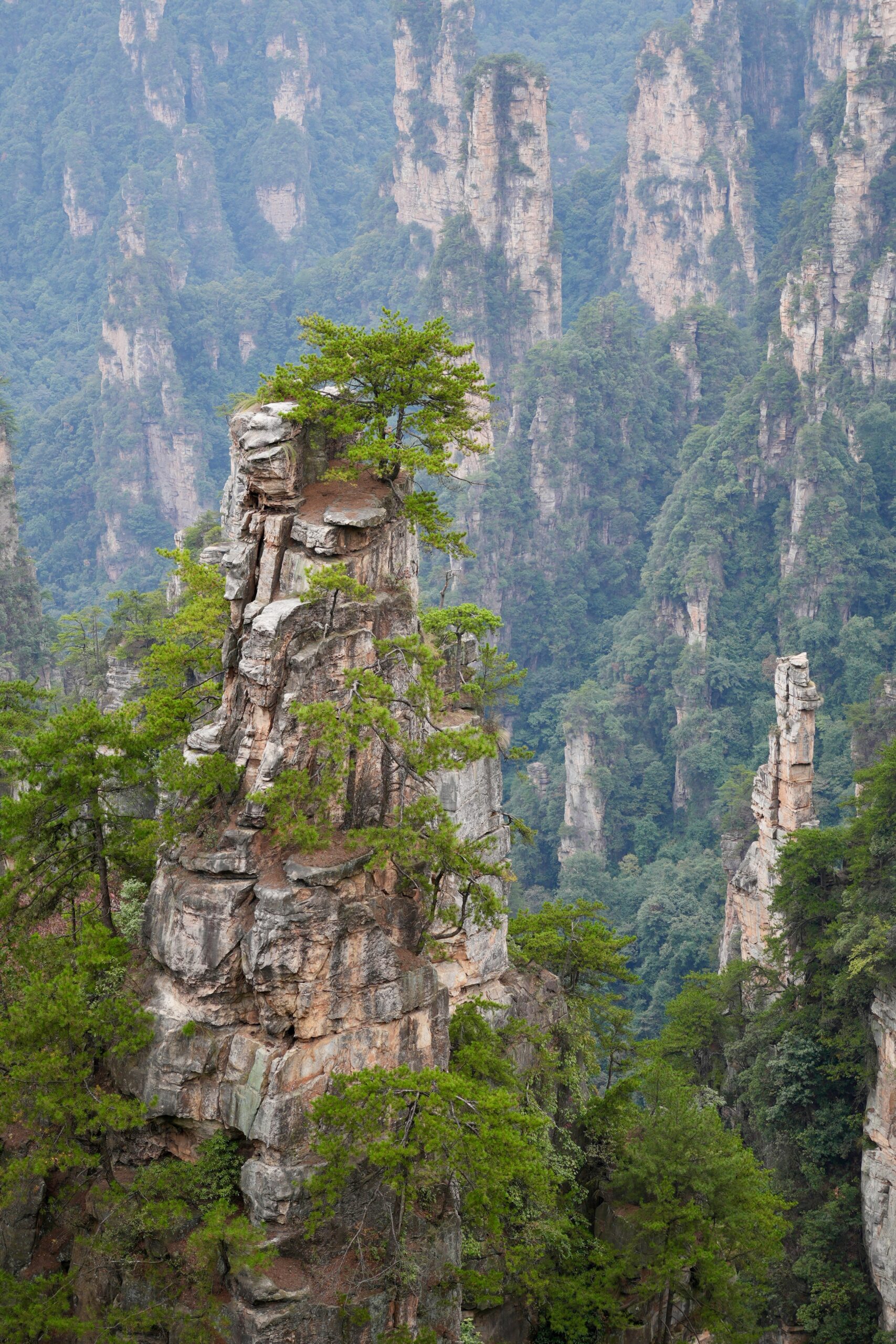
Zhangjiajie is a city in northwestern Hunan whose tourism geography spreads across several distinct mountain areas. The best-known core is Wulingyuan Scenic and Historic Interest Area, which includes Zhangjiajie National Forest Park and other protected scenic zones. Tianmen Mountain lies closer to the urban area and forms a separate high-mountain excursion.
This separation matters when planning days on the ground. Scenic areas are connected by road rather than forming one continuous walking park, so accommodation choice, transfers and entrance arrangements shape the pace of a visit. Dedicated tourist bus routes link downtown transport hubs with several major scenic areas.
Most visits combine elevated viewpoints with time inside the valleys. In Wulingyuan, travelers move between forest paths, shuttle routes, lifts or cableways and lookout platforms that open across densely packed sandstone pillars. Golden Whip Stream offers a lower-level ravine experience, while Yuanjiajie and Tianzi Mountain provide higher panoramas. Tianmen Mountain adds a separate cableway-and-clifftop day close to Zhangjiajie city.
Zhangjiajie works best when the itinerary gives the landscape enough time to change rather than treating it as a single photo stop. A slower sequence of valley walking, elevated viewpoints and one contrasting mountain area creates a clearer sense of scale. We would normally separate Wulingyuan from Tianmen Mountain instead of compressing both into a rushed day.
Three days covers a focused first visit; four days gives more room for weather, slower walking and a separate Tianmen Mountain day without constant transfers.
Mountain conditions can change quickly, and the scenic areas sit higher than Zhangjiajie city. Carry rain protection and an extra layer even when the urban forecast looks mild.
Expect repeated walking between viewpoints, transport stops and forest paths, with stairs and uneven sections common in mountain areas.
Zhangjiajie has an international airport and rail stations; tourist bus services link downtown hubs with Wulingyuan and other major scenic areas.
Prioritize April or October, then keep at least one day flexible enough to move key viewpoints if cloud, rain or visibility changes significantly.
The scenery feels dramatic and forested, but famous viewpoints and transport nodes can be busy, especially during national holidays and summer.
April and October offer a strong balance for scenery and outdoor comfort, according to Hunan tourism guidance. April brings fresh greenery and atmospheric moisture; October often combines cooler conditions with seasonal color. Summer works for travelers who accept heat, rain and crowds, while winter can reward flexibility with quieter landscapes.
Spring brings rising temperatures, lush vegetation and frequent wet weather. Mist can soften views, while rain makes stone steps and mountain paths more slippery.
Summer is warm and rainy in Hunan, though higher mountain areas can feel cooler. Expect humidity, showers and heavier visitor pressure during school holidays.
Autumn is generally cooler and can bring clearer, drier-feeling days. October is highlighted by Hunan tourism authorities as a particularly attractive visiting period.
Winter is cooler and quieter, with occasional snow or ice at elevation. Mountain weather can be striking but requires warm clothing and flexible expectations.
Travelers who value dramatic natural scenery, layered mountain photography and full outdoor days will get the most from Zhangjiajie, especially if they are comfortable combining walking with scenic transport.
It is less suitable for travelers who dislike stairs, variable mountain weather or busy scenic infrastructure, or who want a destination centered mainly on urban culture and nightlife.
The pillars can look completely different in clear light, haze or low cloud. Atmospheric conditions are part of the landscape, but no particular visibility or mist effect can be guaranteed.
Compared with a single-peak mountain destination, Zhangjiajie is more about moving through a broad network of pillars, ravines and viewpoints. The experience rewards multiple angles and different elevations rather than one summit objective.
Facilities are developed in major scenic areas, but long days outdoors, elevation changes, rain and summer humidity can still affect comfort.