China’s ancient capital of Chang’an, shaped by imperial walls, Tang heritage and the Terracotta Army
Best Time to Visit
Spring and autumn
Best Known For
Terracotta Army, city wall and Tang heritage
Key Experience
Imperial history, archaeology and street food
Suggested Stay
2–3 days
Why This Place Matters
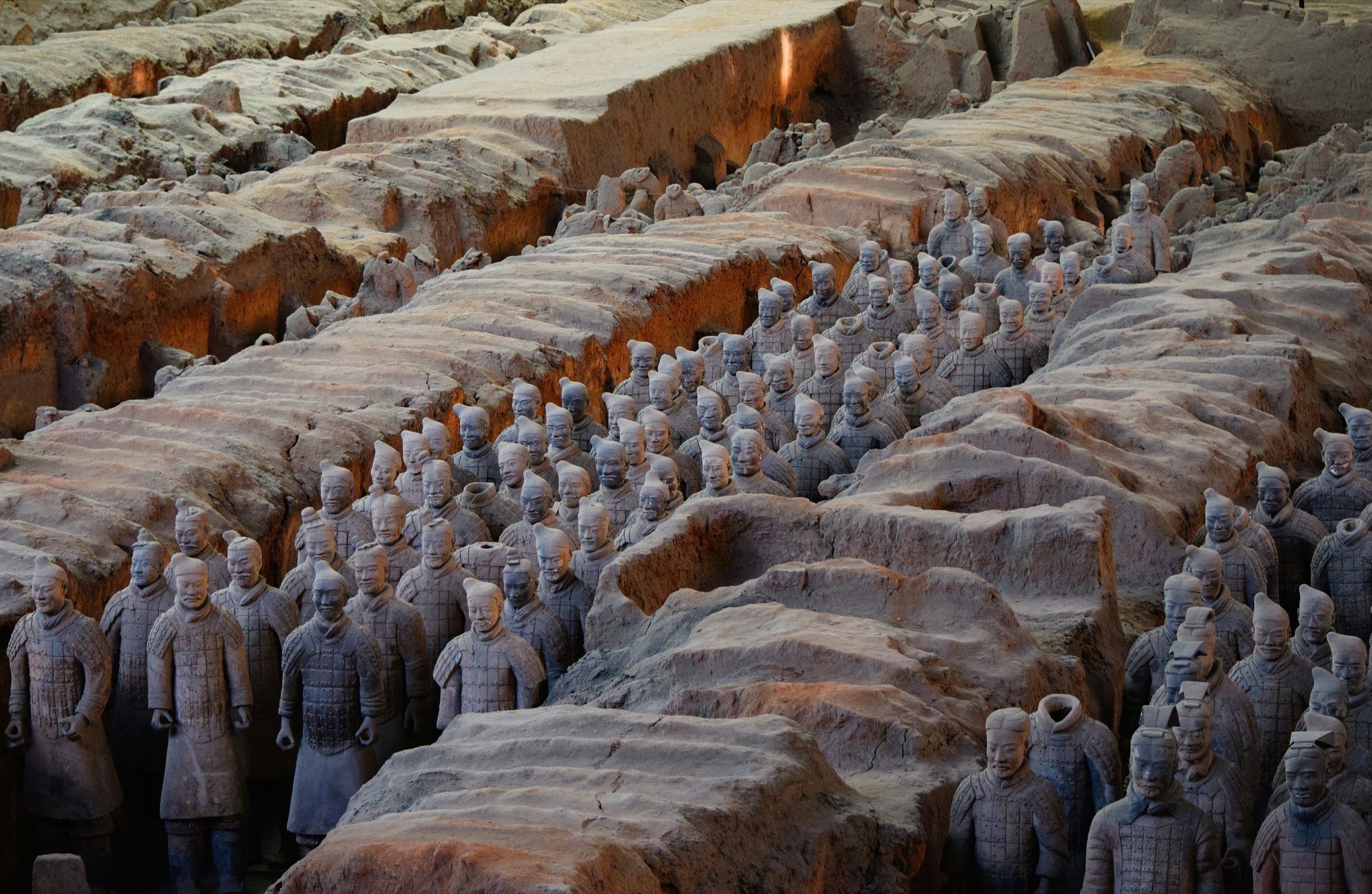
Xi’an is one of the clearest places to read China’s imperial history in the urban landscape. Known in earlier periods as Chang’an, it served as a major capital, and UNESCO identifies Chang’an as the eastern starting point of the Chang’an–Tianshan Silk Roads corridor. The city also anchors the story of China’s first unification through the nearby Mausoleum of the First Qin Emperor and its Terracotta Army.
Within the modern city, the Ming-era wall, Tang Buddhist landmarks and long-established Muslim communities make different historical layers tangible rather than abstract.
Place Context
From Chang’an capitals to modern Xi’an
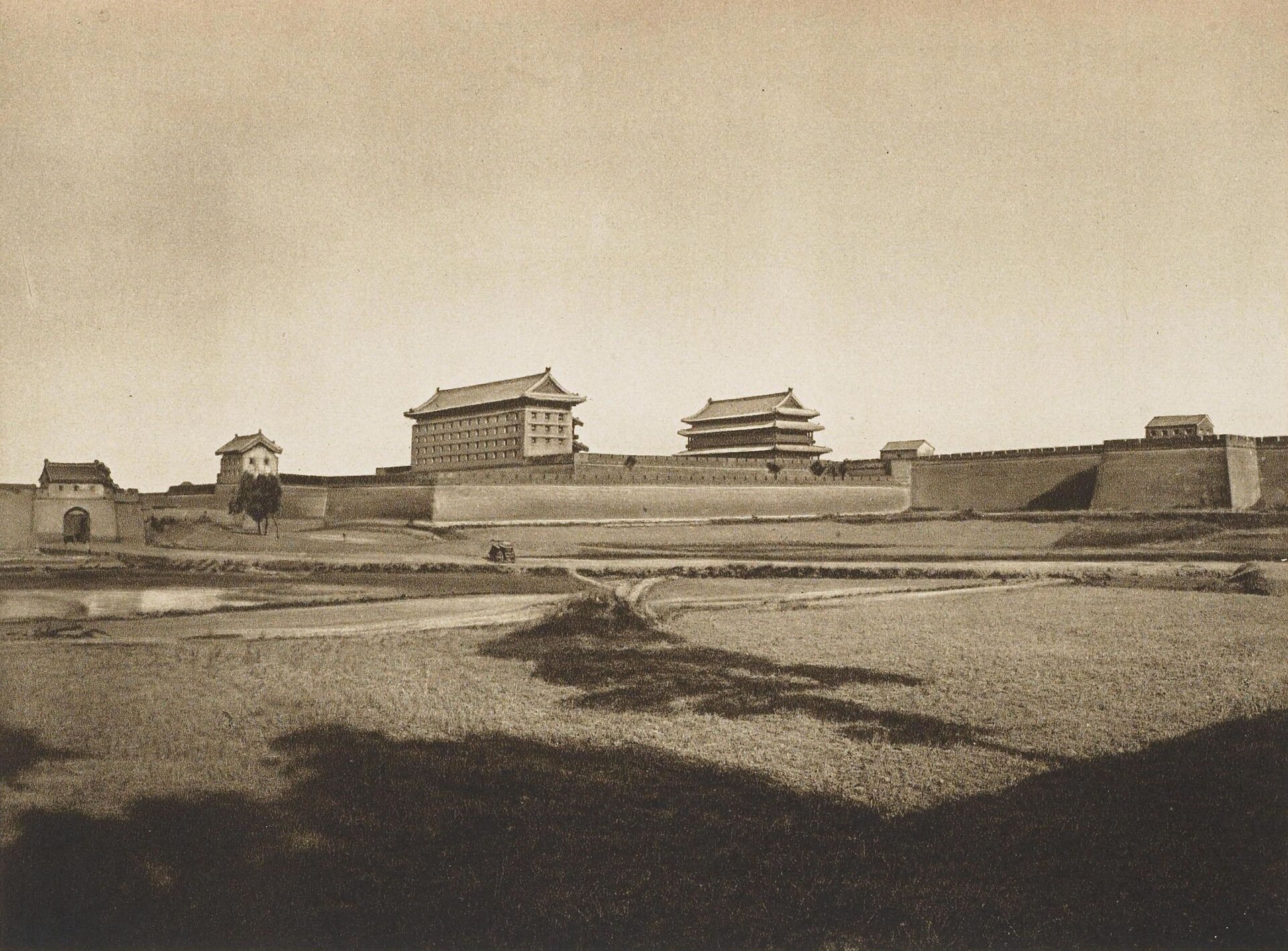
Xi’an’s historic core is still organized around the large Ming-era city wall, while major sites extend well beyond it. The Terracotta Army lies northeast of the city near the Qin imperial mausoleum, so it usually needs a dedicated half day rather than being folded into a casual central walk. Tang-era heritage is represented by sites such as the Giant Wild Goose Pagoda and former palace areas linked to Chang’an.
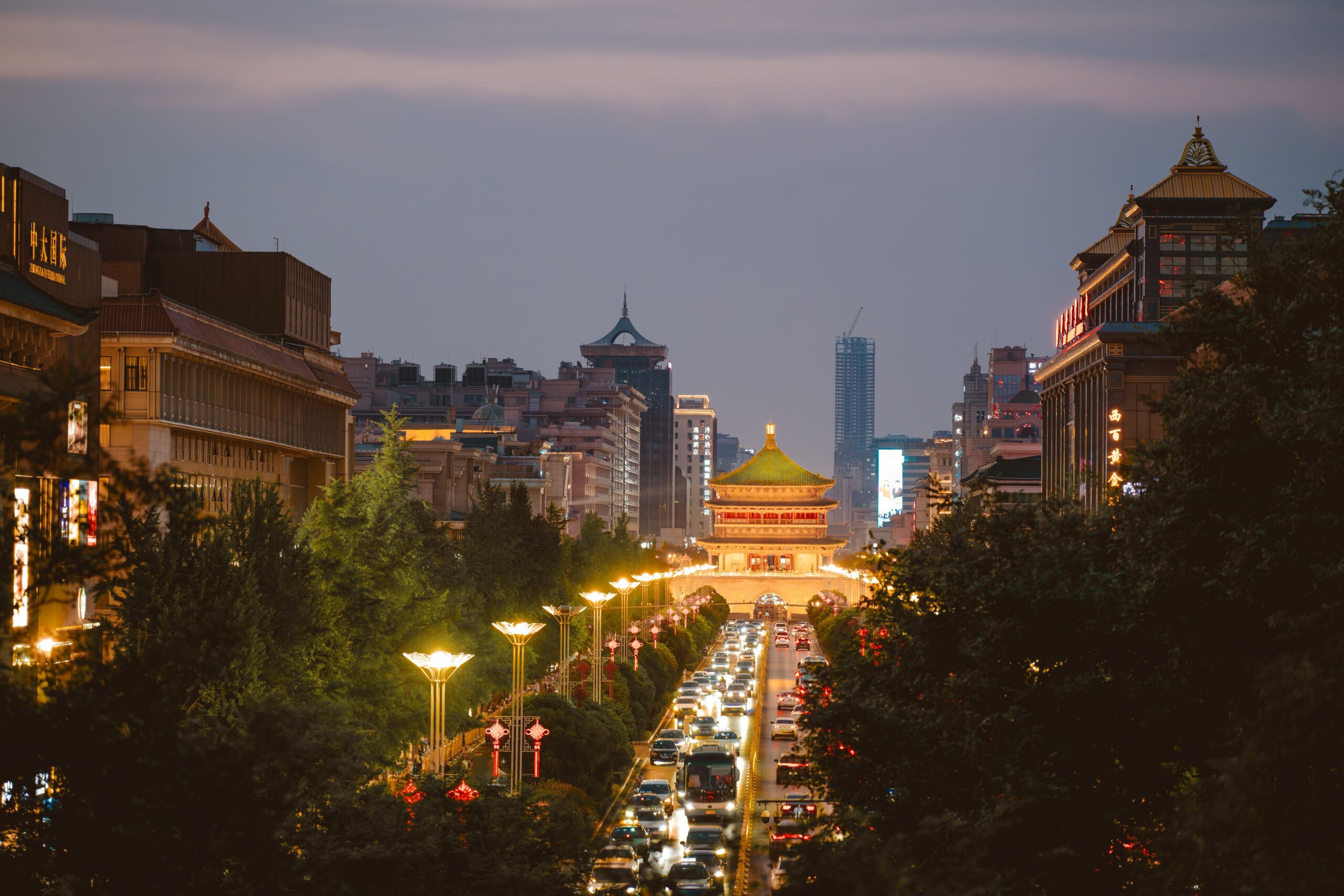
Around the Bell and Drum Towers, the Muslim Quarter adds another layer of living culture through mosques, markets and Shaanxi Muslim food traditions.
What You’ll Find Here
A first visit usually combines three scales of history: the Qin imperial landscape at the Terracotta Army, the preserved urban form of the city wall, and Tang-era Buddhist and Silk Roads heritage. In the center, walking between the Bell and Drum Towers, the wall and the Muslim Quarter gives a compact contrast between monumental architecture and everyday food culture.
Panda Trace Perspective
Xi’an works best when a journey needs historical depth without losing the texture of a living city. The Qin, Han and Tang stories connect naturally to larger themes of imperial state formation, Buddhism and Silk Roads exchange, while the city wall and Muslim Quarter keep the experience grounded in walkable urban spaces rather than isolated monuments.
Duration Logic
Two to three days allows one archaeological day and one to two days for the historic center and Tang-era sites.
Weather Reality
Outdoor exposure matters most on the city wall; midday heat in summer and colder winter conditions can shorten comfortable walking time.
Plan Your Stay
Walking and Terrain
Central sights are walkable, but major archaeological sites require separate transport.
Access
High-speed rail and metro simplify arrival and movement across the urban core.
When to Go
Spring and autumn are the easiest fit for long outdoor sightseeing; summer heat and winter cold require more pacing.
Travel Rhythm
Expect busy heritage sites and dense urban crowds rather than wilderness.
Milder conditions suit long outdoor walks, though day-to-day weather can still vary.
Summer
Hotter conditions increase exposure on the wall; early starts and shade are useful.
Autumn
Cooler, generally comfortable sightseeing weather suits long days across open heritage sites.
Winter
Colder weather can reduce outdoor comfort, especially on exposed sections of the city wall.
Less Ideal For
Travelers seeking quiet nature or a slow rural stay may find Xi’an’s major heritage circuit too urban and crowded.
Photography Reality
The wall, towers and archaeological displays offer strong visual structure, but major sites can be crowded and museum lighting varies.
Comparison
Compared with Beijing, Xi’an is more concentrated around ancient-capital archaeology and Tang heritage, with the Terracotta Army adding a major off-center excursion.
Comfort
Mostly urban sightseeing, with long museum visits and exposed wall sections.