
A river-cut mountain metropolis where Chongqing’s vertical urbanism comes alive after dark
Spring and late autumn
Layered river city, hotpot and night views
Vertical city walks, food and river views
2–3 days
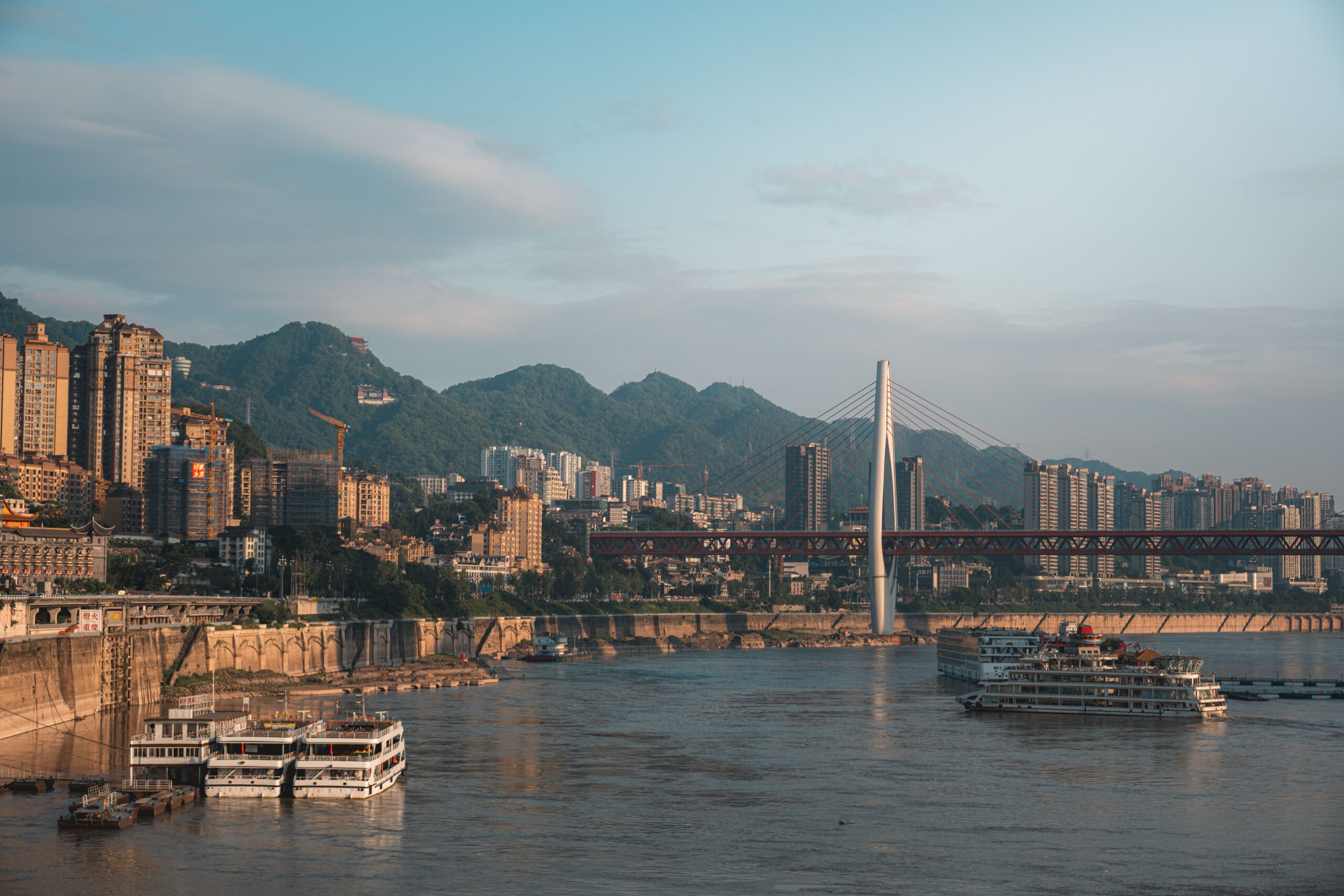
At the meeting of the Yangtze and Jialing rivers, Chongqing rises across steep terrain. Streets, bridges, rail lines and buildings occupy different levels, making movement part of the destination. The result is an unusually physical way to experience a major Chinese metropolis.
Beyond its skyline, the city brings river-port traditions, hotpot culture, wartime history and rapid urban change into one place. Museums and historic districts add context, while Wulong and other outlying landscapes reveal the municipality’s wider scale. Chongqing works best as a layered urban experience, not a checklist of viewpoints.
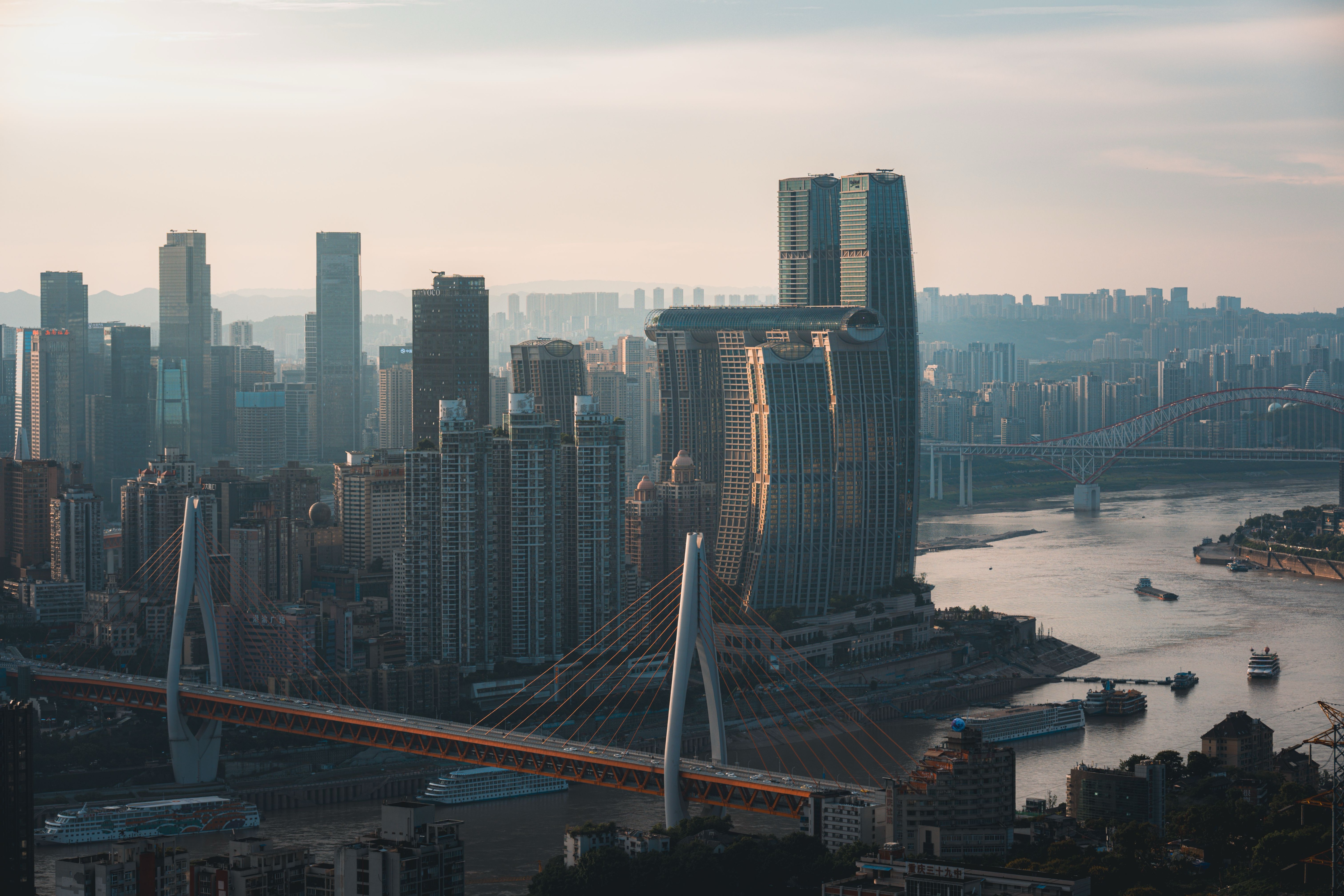
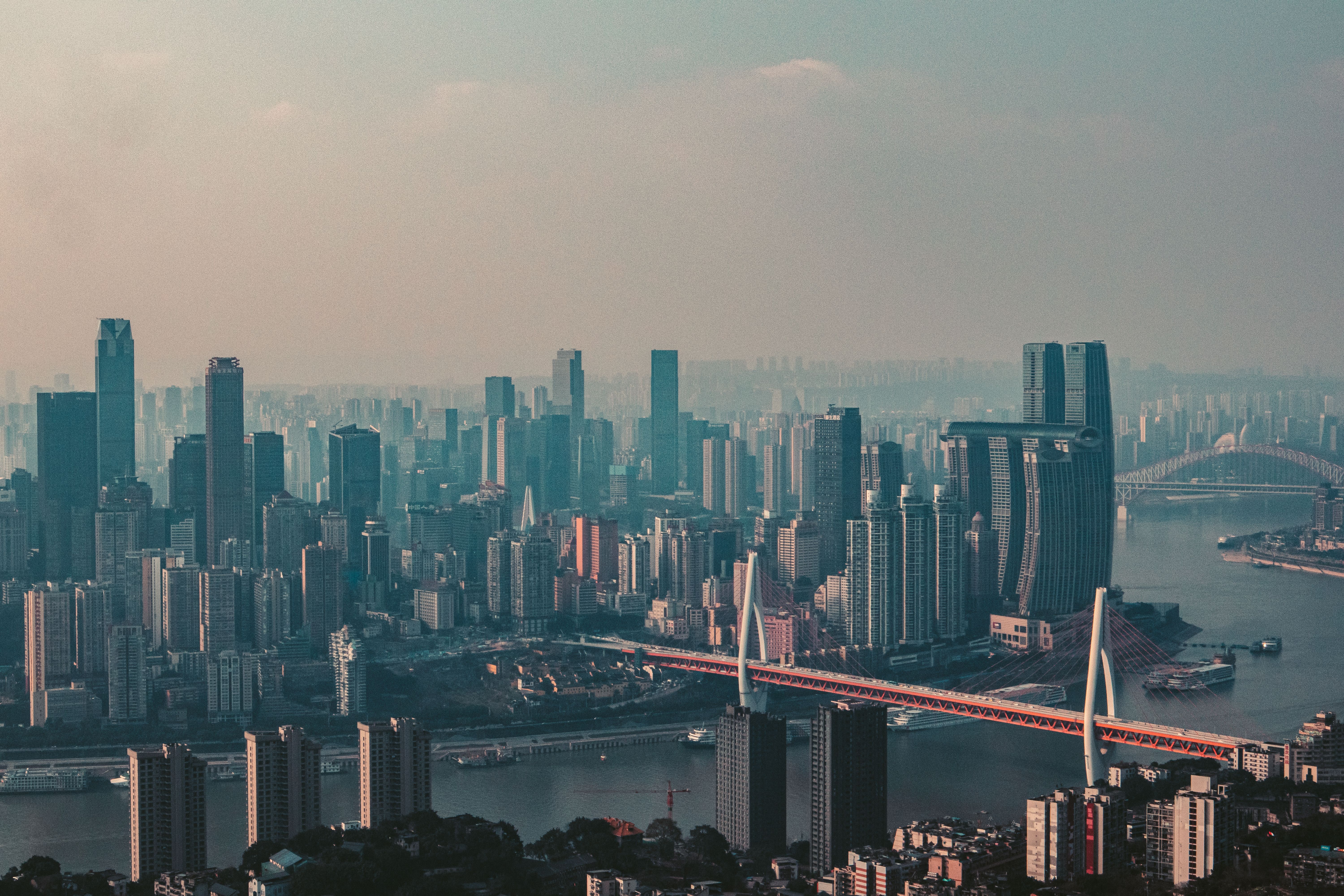
Central Chongqing occupies hilly ground around the Yangtze and Jialing rivers. A street that looks nearby may sit several levels above or below, while bridges, metro stations and pedestrian routes connect elevations in unexpected ways. River crossings and slope changes shape both orientation and daily movement.
The municipality extends far beyond downtown into rural, mountain and karst landscapes. Wulong and the Dazu Rock Carvings belong to the wider Chongqing travel picture, but they require separate time. Within the city, Bayu traditions, river-port history, migration and wartime history are best understood alongside food and modern urban life.
Exploring Chongqing is about moving through the city rather than collecting isolated attractions. A well-paced day can combine riverfront or hillside viewpoints with ordinary streets, food, a museum or historic district, and repeated changes of elevation. The metro shortens some journeys, but route sequencing still matters because nearby places may be separated by stairs, slopes or different levels. Daylight reveals the city’s structure; late afternoon and evening bring its bridges and riverbanks into focus. Treat Wulong, Dazu and other outlying sites as separate extensions.
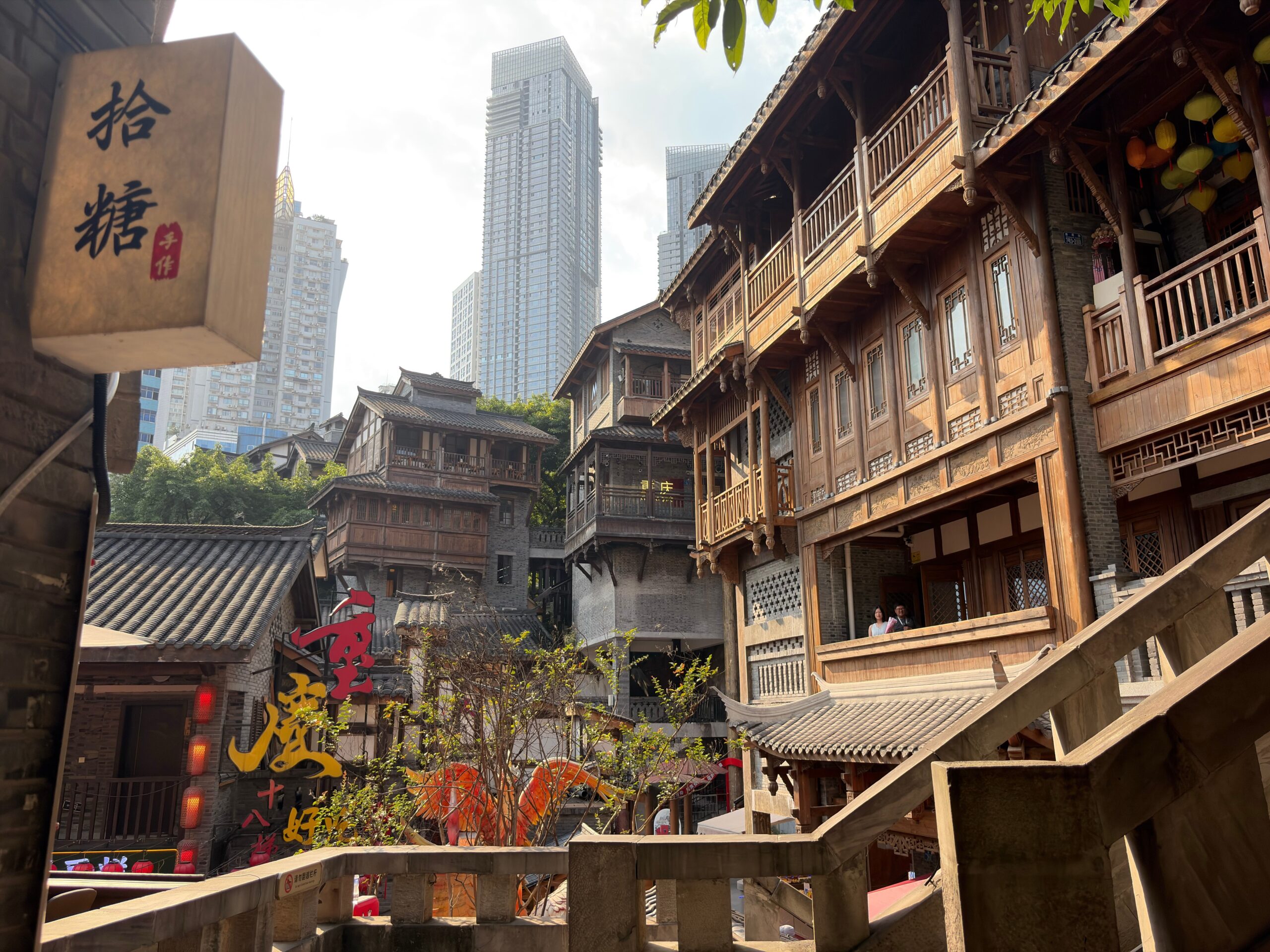
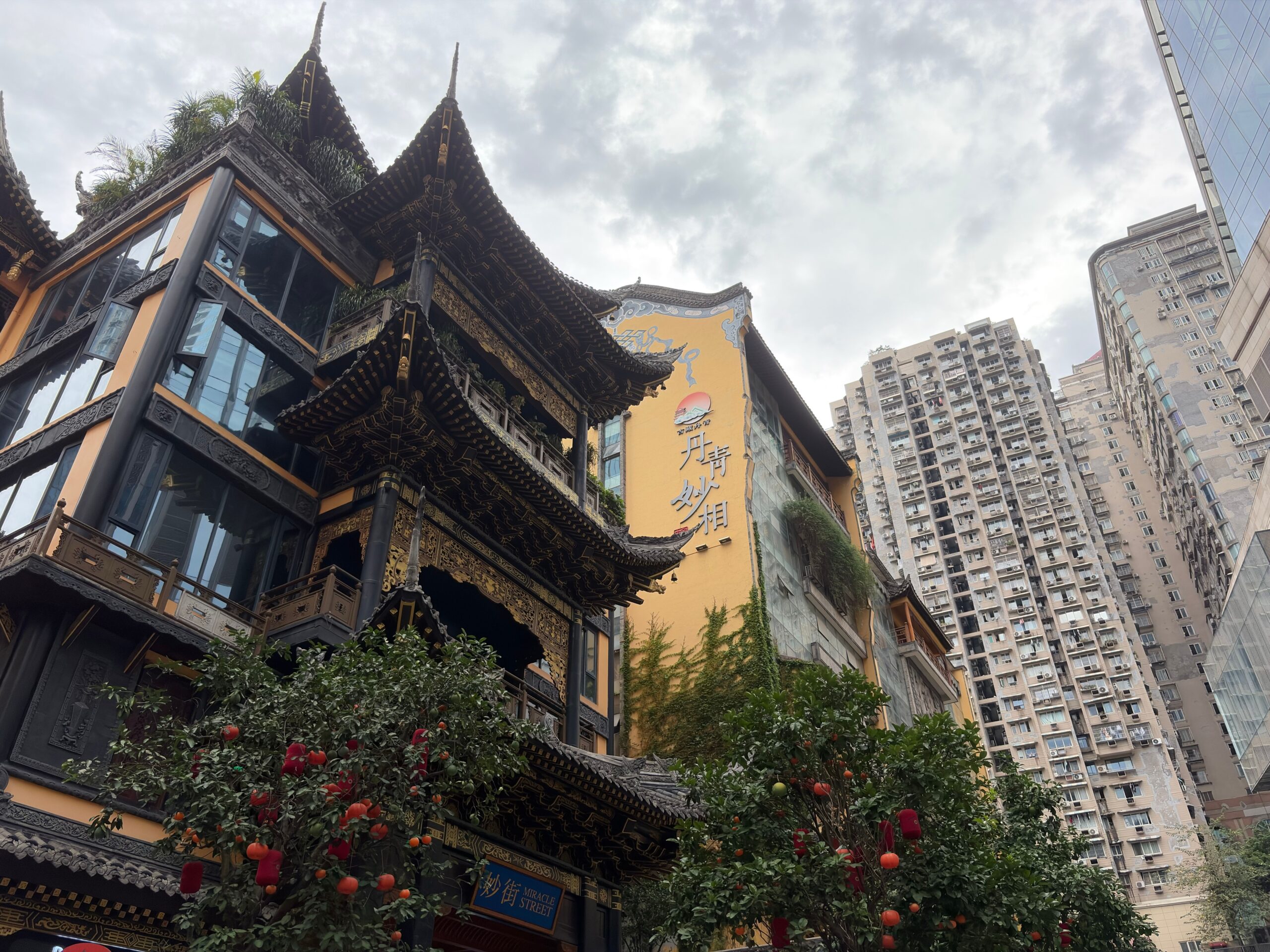
We use Chongqing when a China journey needs a strong change of texture: a contemporary inland metropolis where river geography, infrastructure, food and modern history are experienced together. It works especially well after a monument-led or heritage-focused stop because its value lies in moving through a steep, layered city rather than reaching one headline sight.
Two days cover the essential urban experience with careful sequencing; three allow a slower pace and weather flexibility. Wulong, Dazu and other outlying destinations require separate time.
Heat and humidity shorten comfortable summer walking windows, while rain slows movement on steep surfaces. Keep plans flexible between outdoor exploration, food, museums and evening activities.
Expect frequent stairs, slopes and level changes; efficient route sequencing matters more than the distance shown on a map.
Central days combine metro, road transport and walking; Wulong, Dazu and other outlying heritage areas require separate transfer planning.
Choose spring or late autumn for a walking-heavy stay. In summer, plan around heat, indoor breaks and evening activity. Winter suits atmosphere and food, but never build photography around guaranteed clear views.
Popular viewpoints can be busy, while ordinary streets and earlier hours offer quieter moments within this dense urban setting.
Spring and late autumn usually give the best balance for sustained walking. Summer rewards evening exploration but requires slower daytime pacing. Winter avoids peak heat, though cloud, mist and damp conditions can limit skyline views.
Spring is generally mild and humid, with rainfall increasing as the season advances. Cloud, mist and wet surfaces are normal, and river visibility can vary from day to day.
Summer is hot and humid, with possible prolonged high temperatures. Thunderstorms and other convective weather can interrupt outdoor plans, so heat exposure and sudden rain require flexibility.
Autumn gradually eases summer heat, though rain and cloud can remain significant, especially early in the season. Mist may still affect long-distance river and skyline views.
Winter is relatively mild but often damp, cloudy and foggy. Sunshine can be limited, and low cloud may reduce distant views even when temperatures suit walking.
Best for travelers interested in contemporary China, food, urban photography, infrastructure, river landscapes and modern history. It rewards people who enjoy understanding how a city works, not only visiting landmarks.
Less ideal for travelers who prefer flat walking, low-density settings, quiet evenings or very light physical days. It can feel intense when a journey already includes several large metropolitan stops.
Photograph Chongqing as a layered city, not from one viewpoint. Blue hour suits bridges and riverfront lighting; daytime reveals stairs, rail and elevated roads. Rain, humidity and low cloud can obscure distant views, so keep locations and focal lengths flexible.
Compared with Chengdu, Chongqing is more vertical, river-driven and visually intense. Compared with Xi’an, it is less monument-led and more about contemporary urban form, infrastructure and food. It adds contrast when a journey needs a different city experience.
Hotels and dining are strong, but heat, humidity, rain and repeated elevation changes can make outdoor days physically tiring.